


Resources
Your Guide to Hiring Local Basement Waterproofing Pros
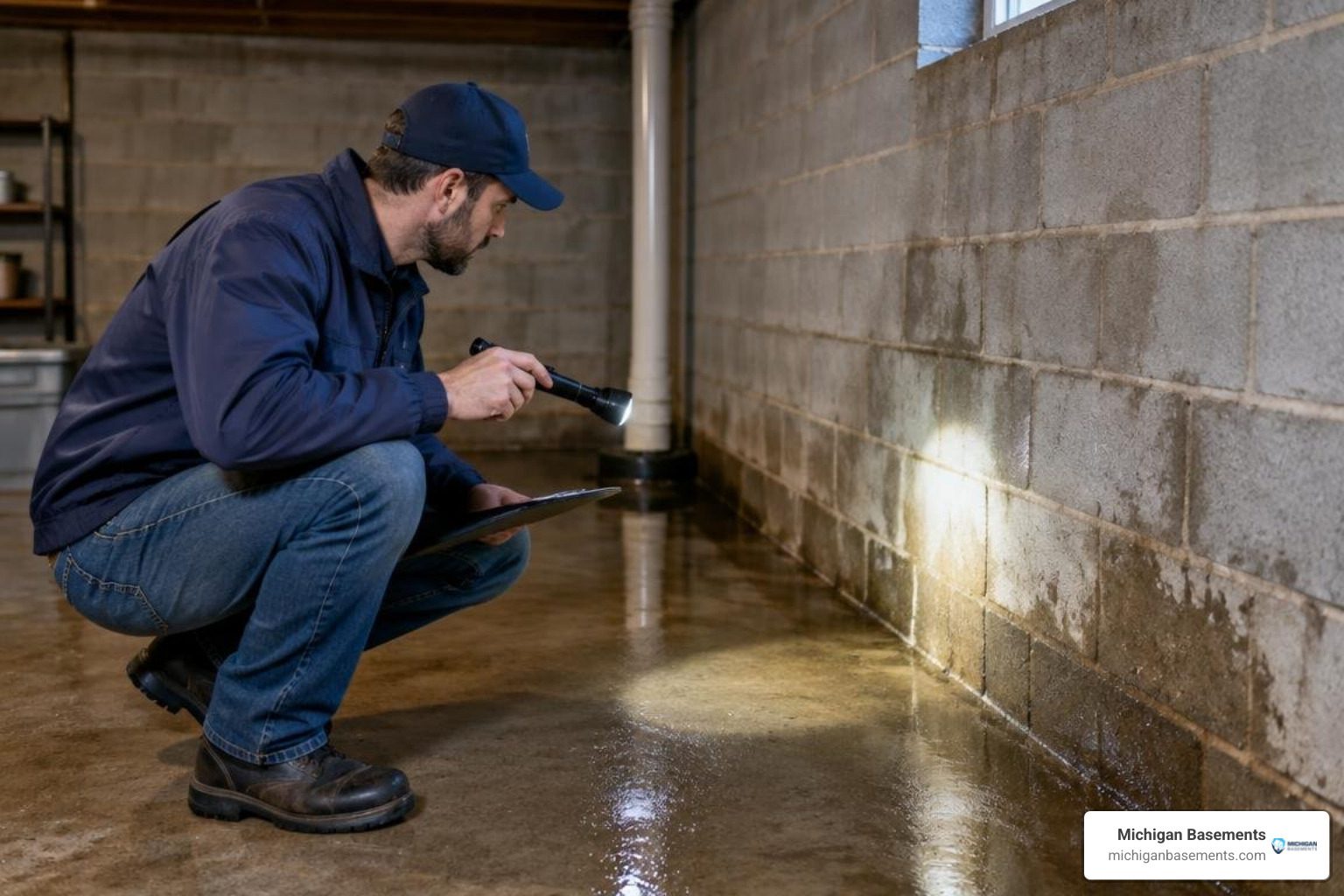
Your Guide to Hiring Local Basement Waterproofing Pros
How to Find a Foundation Waterproofing Contractor Near You
Start with a local contractor who will inspect the source of the water, not just the stain it left behind. Ask for proof of insurance, relevant licenses, a written plan, and clear warranty terms. Compare how each contractor explains the problem and why their proposed fix fits your home.
Dominic Hesano, founder of Michigan Basements, has spent years working in wet basements and damp crawl spaces across Southeast Michigan. For homeowners using the search phrase “foundation waterproofing contractors near me,” a clear diagnosis should come before committing to a repair.
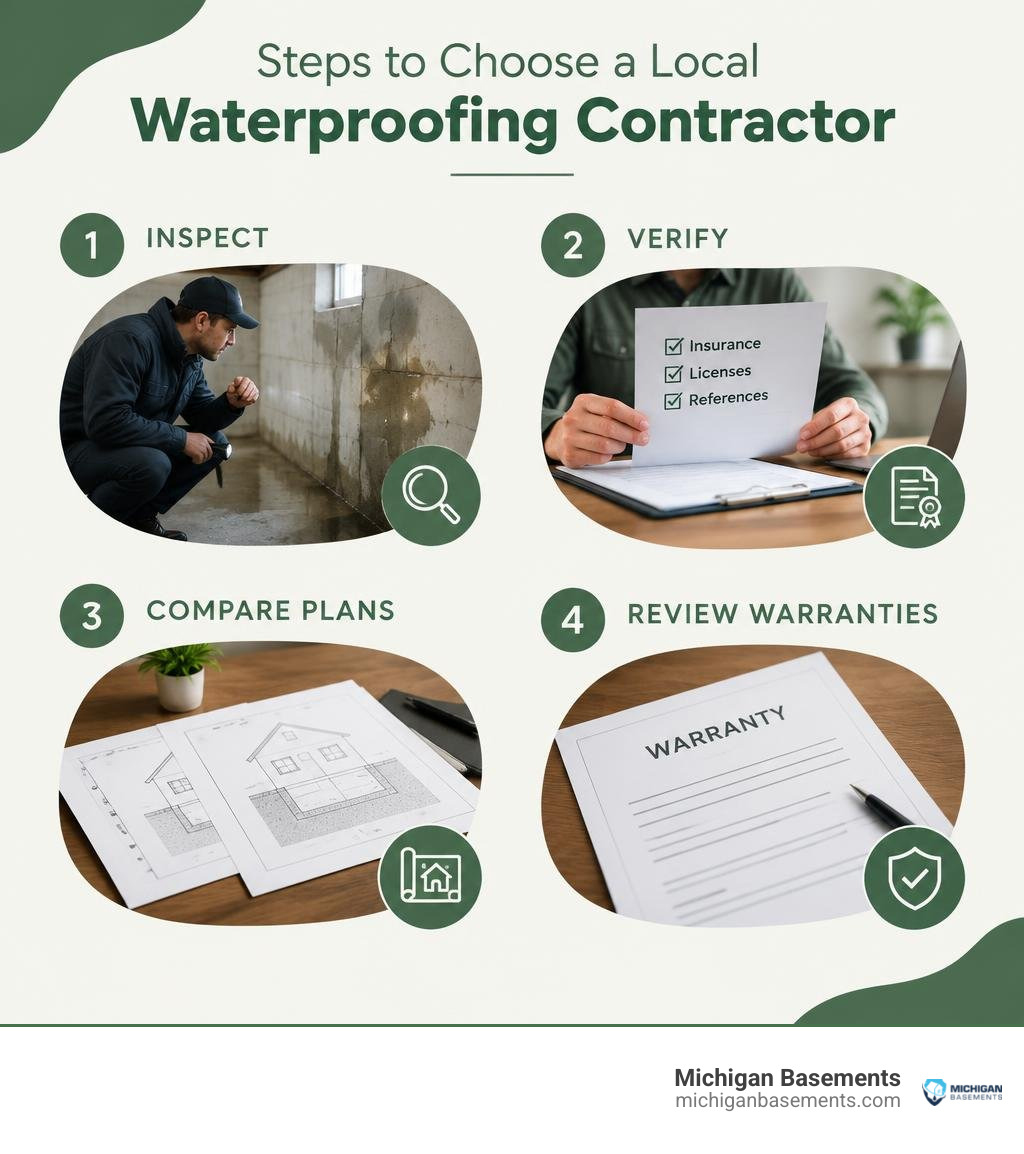
Glossary for foundation waterproofing contractors near me:
Critical Signs of Foundation Water Damage and Why Early Action Matters
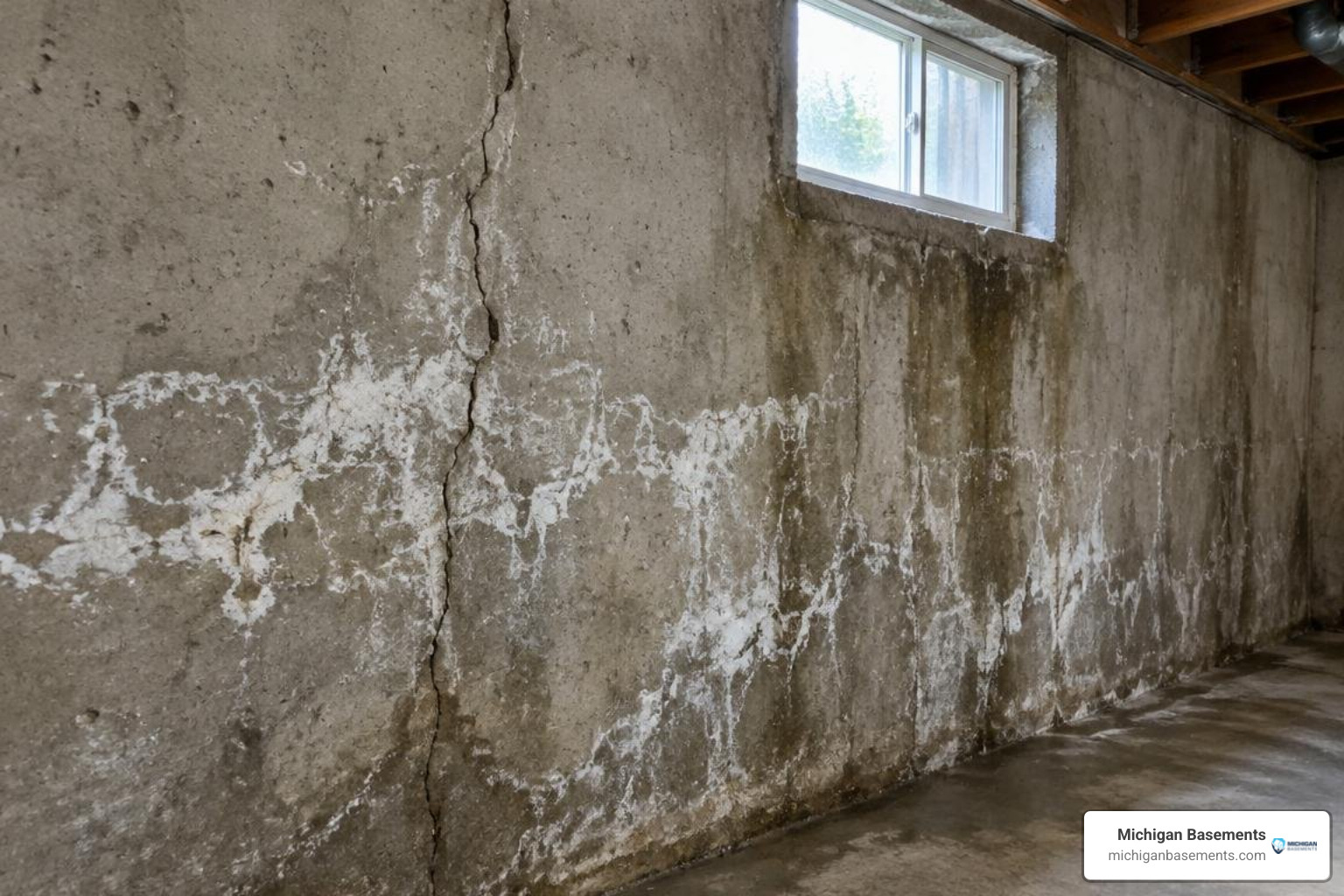
Water intrusion rarely starts as a sudden flood. Most homeowners across Southeast Michigan—whether in Oakland County, Wayne County, or Macomb County—first notice subtle indicators before structural issues escalate. When groundwater builds up around your foundation, it exerts hydrostatic pressure against concrete masonry walls, searching for the smallest path of least resistance.
Recognizing these symptoms early helps you avoid compounding structural damage:
- Efflorescence: This chalky, white mineral powder appears on poured concrete or cinder block walls as moisture evaporates and leaves salt deposits behind.
- Horizontal and Stair-Step Cracks: Hairline shrinkage cracks are common, but horizontal cracks in poured walls or stair-step cracks along mortar joints indicate external soil pressure and foundation movement.
- Sticking Doors and Windows: When foundation footings shift or settle due to water-softened soil, door frames and window openings on upper floors pull out of square.
- Drywall and Ceiling Cracking: Shifts in the basement load-bearing points create diagonal stress cracks across drywall in living rooms and upper-level hallways.
- Musty Odors and Humidity: A persistent damp smell indicates moisture trapped behind baseboards or within concrete pores, creating an ideal breeding ground for microbial growth.
Early intervention prevents minor leaks from turning into major structural repairs. Leaving foundation seepage unaddressed compromises the structural integrity of your home, rots floor joists, and ruins finished spaces. If you notice signs of structural movement alongside moisture, our specialized foundation repair services can stabilize walls, restore footings, and secure your home’s framing before secondary damage escalates.
How to Evaluate Foundation Waterproofing Contractors Near Me
Finding the right specialist requires looking beyond online advertisements to verify practical experience, regional familiarity, and transparent business practices. When searching for qualified pros in communities like Troy, Birmingham, or Livonia, focus on contractors who understand local clay soil composition and regional freeze-thaw cycles.
To protect your investment, follow these core evaluation criteria:
- Proper Licensing and Insurance: Always confirm that the contractor holds active residential builder licenses, general liability coverage, and workers’ compensation. While checking state licensing boards or local regulatory records, ensure the business is authorized to pull municipal building permits in your specific city or township.
- Clear, Itemized Written Estimates: Avoid contractors who provide vague, verbal quotes or lump-sum figures on a handshake. Reputable specialists provide itemized estimates detailing trenching footage, basin installations, discharge line routes, and pump specifications. Learning how to choose a waterproofing company that fits your budget helps you weigh system quality against upfront costs.
- Established Local Reputation: Look for contractors with a strong track record across your immediate area, whether in Bloomfield Hills, Rochester, or Sterling Heights. Experienced teams have direct knowledge of neighborhood water table depths and municipal discharge regulations.
- Red Flags to Watch Out For: Steer clear of high-pressure sales tactics that demand same-day signatures for temporary discounts. Be cautious of contractors who demand large upfront cash payments or suggest one-size-fits-all treatments without inspecting your basement’s exterior perimeter and interior foundation walls.
Questions to Ask Foundation Waterproofing Contractors Near Me
Before signing a contract, interview your prospective company with these essential questions:
- Do you provide a no-cost, thorough visual inspection and a detailed written estimate?
- What specific waterproofing method do you recommend for my foundation type, and why?
- What is the estimated project timeline from initial excavation to final cleanup?
- Is your warranty transferable to future homeowners if I decide to sell my property?
- What dust-containment and floor-protection protocols does your crew use during installation?
- Are all required city permits and municipal inspections included in the proposal?
Why DIY Fixes Fail vs Professional Foundation Waterproofing Contractors Near Me
It can be tempting to head to the hardware store for masonry sealants, hydraulic cement, or roll-on waterproof paint. However, surface paints and topical patches fail to address the root cause of basement seepage: external hydrostatic pressure.
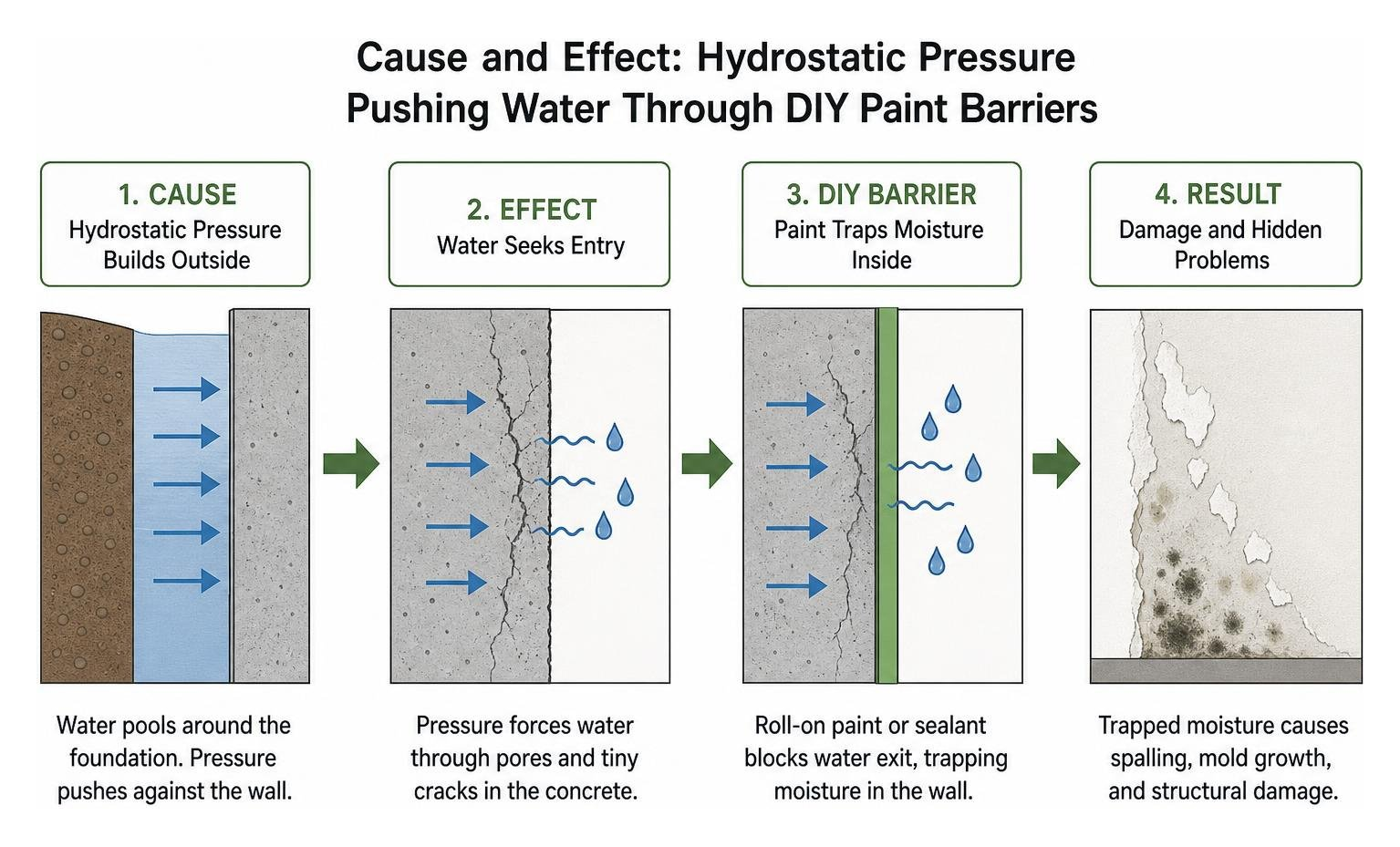
When water pools against your foundation, hydrostatic pressure pushes through porous concrete. DIY roll-on coatings merely trap moisture inside the wall, which accelerates spalling, mortar degradation, and hidden mold growth behind paint bubbles. Understanding the limits of DIY basement waterproofing saves you from costly secondary repairs later.
Professional systems permanently manage hydrostatic pressure by channeling groundwater away before it penetrates your living areas, ensuring reliable and lasting protection.
Waterproofing Solutions: Interior vs. Exterior Methods
Effective basement water management relies on understanding professional basement waterproofing and choosing the correct approach for your home’s layout, exterior landscaping, and structural foundation type. Both interior and exterior drainage methods follow standard waterproofing engineering principles to relieve hydrostatic pressure and redirect groundwater away from structural walls.
| Feature / Consideration | Interior Drainage Systems (Drain Tile) | Exterior Waterproofing Solutions |
|---|---|---|
| Primary Mechanism | Captures water beneath the floor slab and routes it to a sump basin | Stops groundwater on the outside before it touches the foundation walls |
| Excavation Requirement | Trenching around the interior basement perimeter through the concrete floor | Heavy machine excavation around the entire outdoor foundation perimeter |
| Disruption Level | Confined to the basement area; no exterior landscape disruption | Requires temporary removal of decks, porches, walkways, and shrubbery |
| Soil & Climate Suitability | Ideal for high water tables, clay soil, and freeze-thaw zones | Ideal for structural wall repairs and external membrane installation |
| Average Project Timeline | 2 to 4 business days | 5 to 10+ business days (weather-dependent) |
| Key Components | Perforated drain pipe, vapor wall liners, and dual-pump sump basins | Exterior elastomeric membrane, dimple board, and exterior drain tile |
In Southeast Michigan, dense clay soil expands significantly when saturated with autumn rain and freezes solid during winter months. This freeze-thaw cycle puts repetitive lateral pressure on exterior masonry.
Internal French drain tile systems, paired with heavy-duty vapor barriers and high-output sump pump configurations, represent the most reliable and non-invasive approach for managing water tables across Wayne, Oakland, and Macomb counties.
Cost Factors, Timelines, and Preventative Maintenance
The overall investment required to waterproof your home depends on several key property variables. Understanding basement waterproofing costs allows homeowners to make informed decisions about their repair budget.
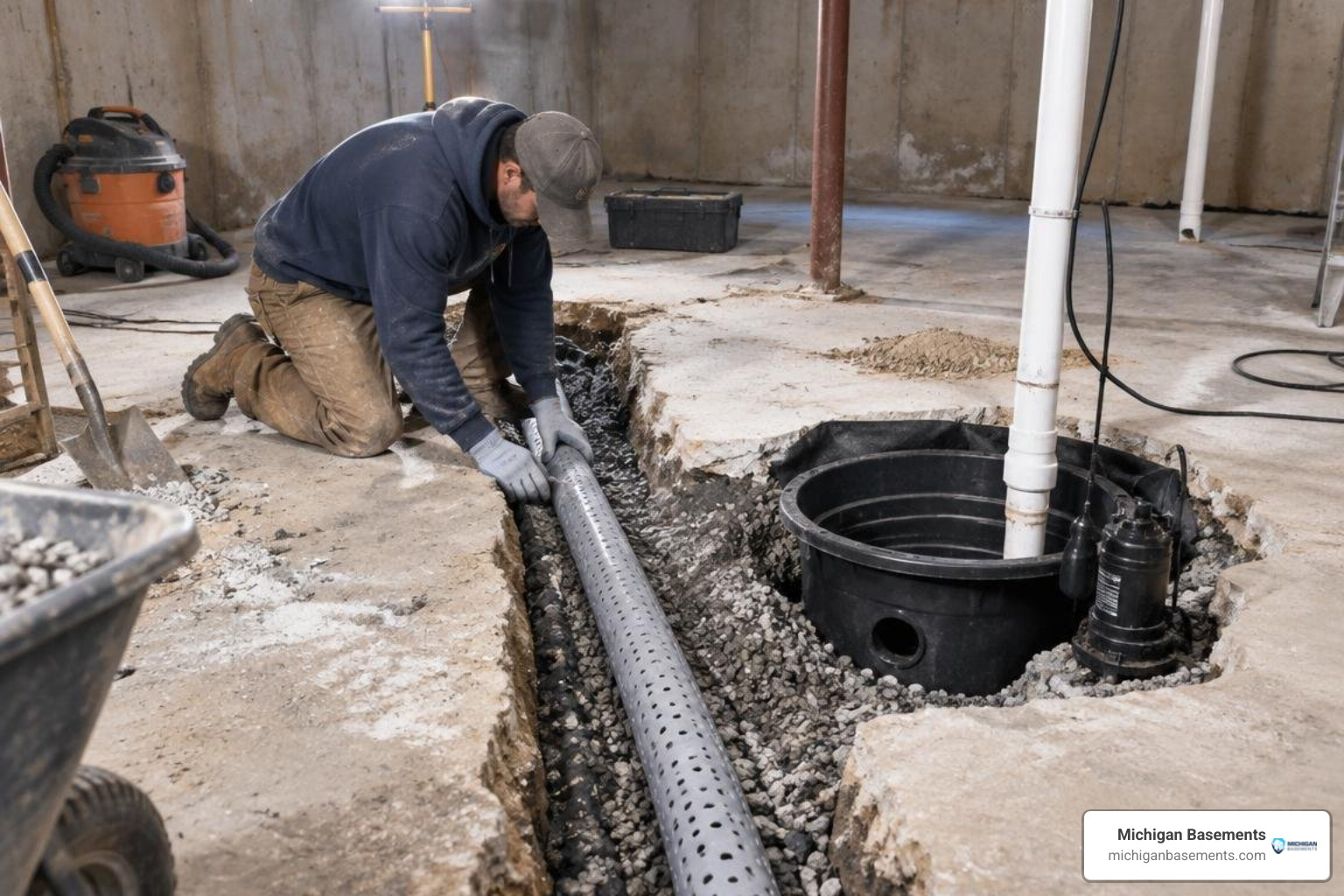
Key elements influencing project costs include:
- Foundation Perimeter Footage: Larger basement footprints require more linear feet of interior trenching, piping, and wall barrier material.
- Foundation Depth and Accessibility: Deep basement walls require greater labor, structural shoring, and excavation effort than shallow footings or split-level basements.
- Water Management Hardware: Upgrading from a standard single pump to an industrial cast-iron primary sump pump paired with an auxiliary battery backup system impacts initial equipment costs while providing comprehensive emergency protection during power outages.
- Finished vs. Unfinished Basements: Removing stud framing, drywall, and finished flooring adds labor time prior to interior slab trenching.
Most standard interior basement waterproofing projects take between 2 to 4 days to complete, while full exterior excavation projects often take a week or more depending on weather and site accessibility. To help homeowners plan accurately, Michigan Basements provides free in-home inspections and offers a straightforward online pricing tool to estimate project costs before scheduling an appointment.
Protecting Your System Over Time
A professionally engineered system provides decades of moisture protection, but long-term performance also depends on your home’s surrounding environment. To understand waterproofing system longevity, pair your installation with these essential exterior maintenance practices:
- Gutter and Downspout Management: Clean gutters at least twice per year to prevent roof runoff from overflowing directly beside foundation walls. Extend downspout discharge lines at least 6 to 10 feet away from the home.
- Exterior Soil Grading: Ensure the topsoil surrounding your foundation slopes away from the structure at a minimum pitch of 1 inch per foot for the first 6 to 10 feet.
- Annual Sump Pump Maintenance: Test your sump pump every spring and fall by pouring a bucket of water into the basin to confirm float switch activation. Clear away any accumulated silt or gravel from the pump intake screen.
Frequently Asked Questions About Local Foundation Waterproofing
Do waterproofing contractors offer free inspections and written estimates?
Yes, reputable foundation waterproofing specialists like Michigan Basements provide no-cost, comprehensive inspections and itemized written estimates for homeowners across Southeast Michigan. During an on-site evaluation, a certified contractor assesses basement wall cracks, measures relative humidity, checks crawl space moisture, and inspects exterior soil grading to determine the exact water source before recommending a tailored repair plan.
How long does a typical basement waterproofing project take?
In Southeast Michigan homes, professional waterproofing timelines vary based on the required engineering solution:
- Foundation Crack Injections: High-pressure polyurethane or epoxy structural crack injections typically take 2 to 5 hours.
- Interior Drain Tile Systems: Standard residential interior drainage and sump basin installations take 2 to 4 business days.
- Full Exterior Waterproofing: Exterior excavation, wall rebuilding, and exterior membrane applications generally require 5 to 10 business days, subject to local weather and soil conditions.
What warranties should I expect from a reputable waterproofing contractor?
Reputable contractors such as Michigan Basements provide fully transferable lifetime warranties covering interior drainage systems, wall vapor barriers, and sump basins. This ensures continuous protection for the structure that transfers seamlessly to future home buyers across Southeast Michigan. Mechanical hardware, including primary sump pumps and auxiliary battery backup units, includes dedicated manufacturer warranties alongside the contractor’s workmanship guarantee.
Conclusion
Water intrusion is a progressive issue that compromises your home’s structural stability, indoor air quality, and property value if left unaddressed. Protecting your foundation requires working with local specialists who understand Michigan’s unique clay soil, shifting water tables, and harsh winter freeze-thaw cycles.
At Michigan Basements, our family-owned team delivers decades of dedicated structural and moisture-control expertise to homeowners across Southeast Michigan, including Oakland, Macomb, Wayne, Livingston, Washtenaw, Genesee, and Lapeer counties. We take pride in clean workmanship, honest communication, and permanent solutions designed around your home’s specific layout.
Don’t wait for the next heavy rainstorm to find out where your foundation leaks. Contact our experienced team today to schedule professional basement waterproofing services and get your comprehensive, no-cost inspection and written estimate. You can also request a free estimate to start protecting your home.
 Get instant pricing!