


Resources
How to Waterproof Your Home and Keep Mold at Bay

How to Waterproof Your Home and Keep Mold at Bay
Why Waterproofing Your Home Is Critical for Structural Health
Waterproofing your home starts with controlling surface drainage, installing an interior drain tile system with a sump pump, and encapsulating crawl spaces to keep groundwater and moisture from reaching the foundation. For Southeast Michigan homeowners, these professional measures are the most reliable way to prevent structural damage and mold before they begin.
Michigan Basements is a Southeast Michigan basement waterproofing, foundation repair, crawl space encapsulation, and sump pump installation contractor serving homeowners in Metro Detroit, Oakland County, Macomb County, Wayne County, Ann Arbor, Howell, and nearby communities.
Direct answer: the best waterproofing plan for an existing Southeast Michigan home is usually a professional system that relieves hydrostatic pressure at the footing, moves water to a sump basin, discharges it away from the foundation, and controls crawl space humidity where applicable.
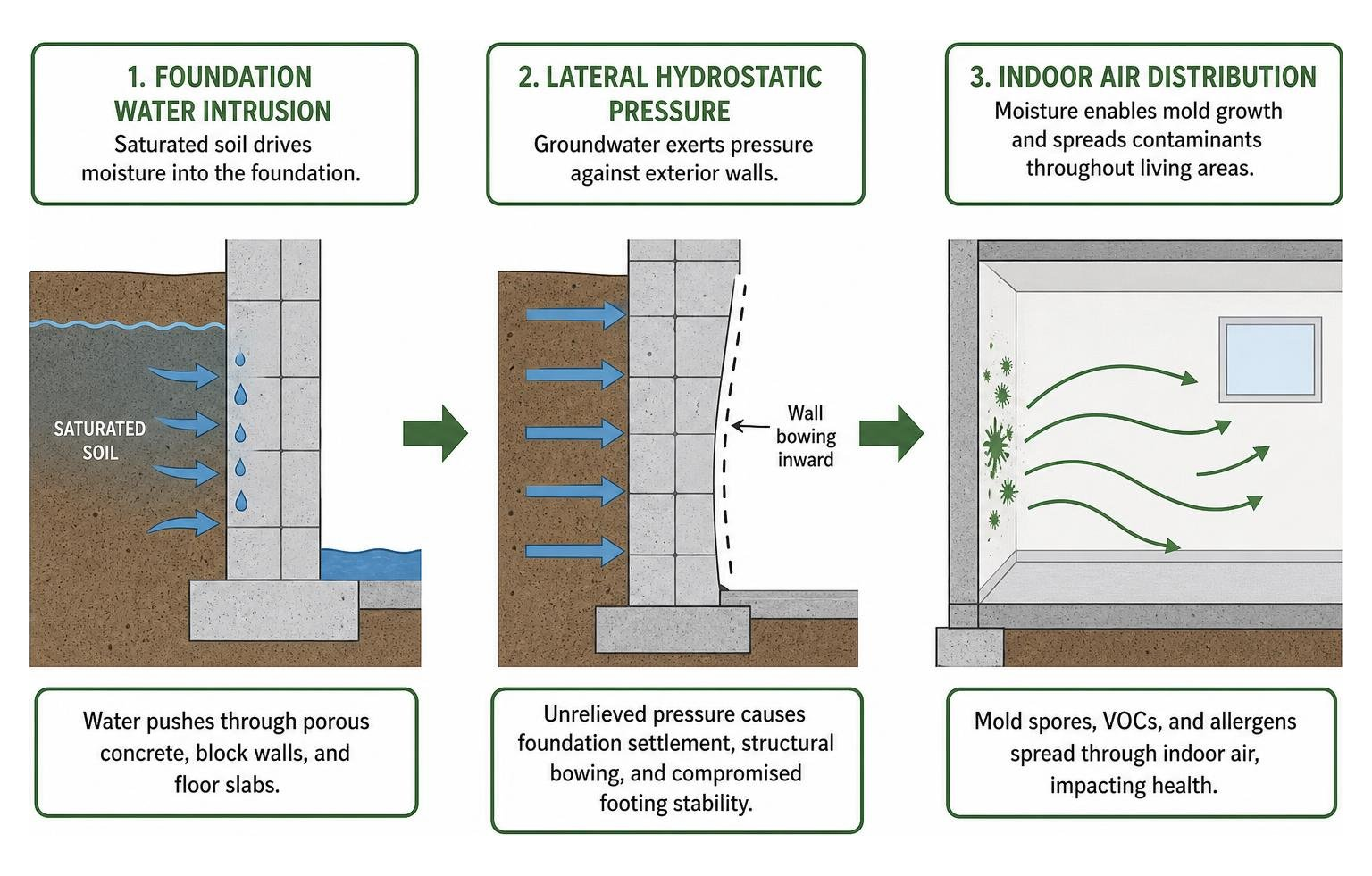
Water behaves like an uninvited guest who refuses to leave—and it brings immense pressure along with it. When soil surrounding a foundation becomes saturated from heavy rains or rapid spring snowmelts, groundwater exerts extreme hydrostatic pressure against exterior masonry. This lateral and upward force pushes moisture directly through porous poured concrete, block walls, and floor slabs.
Over time, unrelieved pressure can contribute to foundation settlement, structural bowing, and compromised footing stability. Basement flooding is one of the most common foundation-related problems reported by property owners. Understanding the mechanics of basement waterproofing is essential for preserving the load-bearing integrity of your property.
When moisture penetrates concrete, it dissolves internal mineral salts and deposits them on interior surfaces as a white, powdery residue known as efflorescence. Left unaddressed, ongoing capillary action and moisture cycling leach the structural binders out of concrete, accelerating aggregate degradation.
According to foundational research on residential moisture control, uncontrolled water movement remains one of the primary drivers of building envelope deterioration, making proactive mitigation vital for the lifespan of your foundation.
Stopping Mold and Improving Indoor Air Quality
Water intrusion is not merely a structural concern; it is an immediate indoor air quality hazard. Mold spores can germinate quickly following a leak or high-moisture event. Once established, these colonies release microscopic airborne spores, volatile organic compounds (VOCs), and allergens throughout living areas.
This migration happens because of the “stack effect.” Warm air naturally rises toward the upper levels and roof of a house, creating a low-pressure vacuum on the lower floors. As a result, basement and crawl space air can move into bedrooms and living spaces above.
When your lower levels harbor elevated relative humidity—especially when it consistently exceeds recommended indoor moisture levels—that damp, contaminated air circulates into living areas. Proper engineered waterproofing removes the ambient moisture mold requires to survive.
Early Warning Signs of Water Intrusion
Catching moisture issues early prevents minor seepage from escalating into structural damage.
Keep an eye out for these visual and sensory warning signs:
- Efflorescence and Flaking Masonry: White, powdery mineral blooms on exposed poured concrete or cinder blocks indicating active vapor migration.
- Musty, Earthy Odors: A distinct damp smell indicating hidden mold colonies, decomposing organic matter, or saturated framing.
- Hairline and Stepped Cracks: Horizontal wall cracks or stair-step fractures in mortar joints caused by excessive soil expansion.
- Peeling Paint or Delaminating Finishes: Blistering paint, rusty drywall screws, or warping baseboards in finished basements.
- Cove Joint Seepage: Wet perimeters where the horizontal concrete slab meets the vertical foundation wall, a classic sign of high water tables and hydrostatic pressure.
Core Professional Interior and Exterior Waterproofing Solutions
Modern structural waterproofing relies on two distinct engineering approaches: intercepting water before it reaches the foundation (positive-side/exterior) or capturing and relieving groundwater once it arrives at the footing (negative-side/interior).
| Solution Type | Primary Function | Typical Longevity | Key Components | Best Application |
|---|---|---|---|---|
| Interior Drainage Systems | Relieves hydrostatic pressure; collects and evacuates groundwater | 25–30+ years | Perforated pipe, sump basin, pump, wall vapor barrier | Existing homes, finished basements, high water tables |
| Exterior Waterproofing | Blocks liquid water from contacting the foundation structure | 20–50+ years | Excavation, elastomeric membrane, dimple board, weeping tile | New construction, severe wall degradation, exterior access |
Interior Systems: Managing Seepage and Lowering Hydrostatic Pressure
Interior waterproofing focuses on hydro-pressure relief and controlled evacuation. Because retrofitting exterior foundations involves extensive excavation, interior water management provides a dependable, non-disruptive, long-term solution for existing structures.
The backbone of this approach relies on sub-floor drain tile systems. Technicians open a trench along the interior perimeter footing, install perforated drainage piping encased in washed aggregate, and restore the concrete slab. This creates an engineered channel of least resistance, diverting water away from the cove joint before it can build pressure beneath the slab.
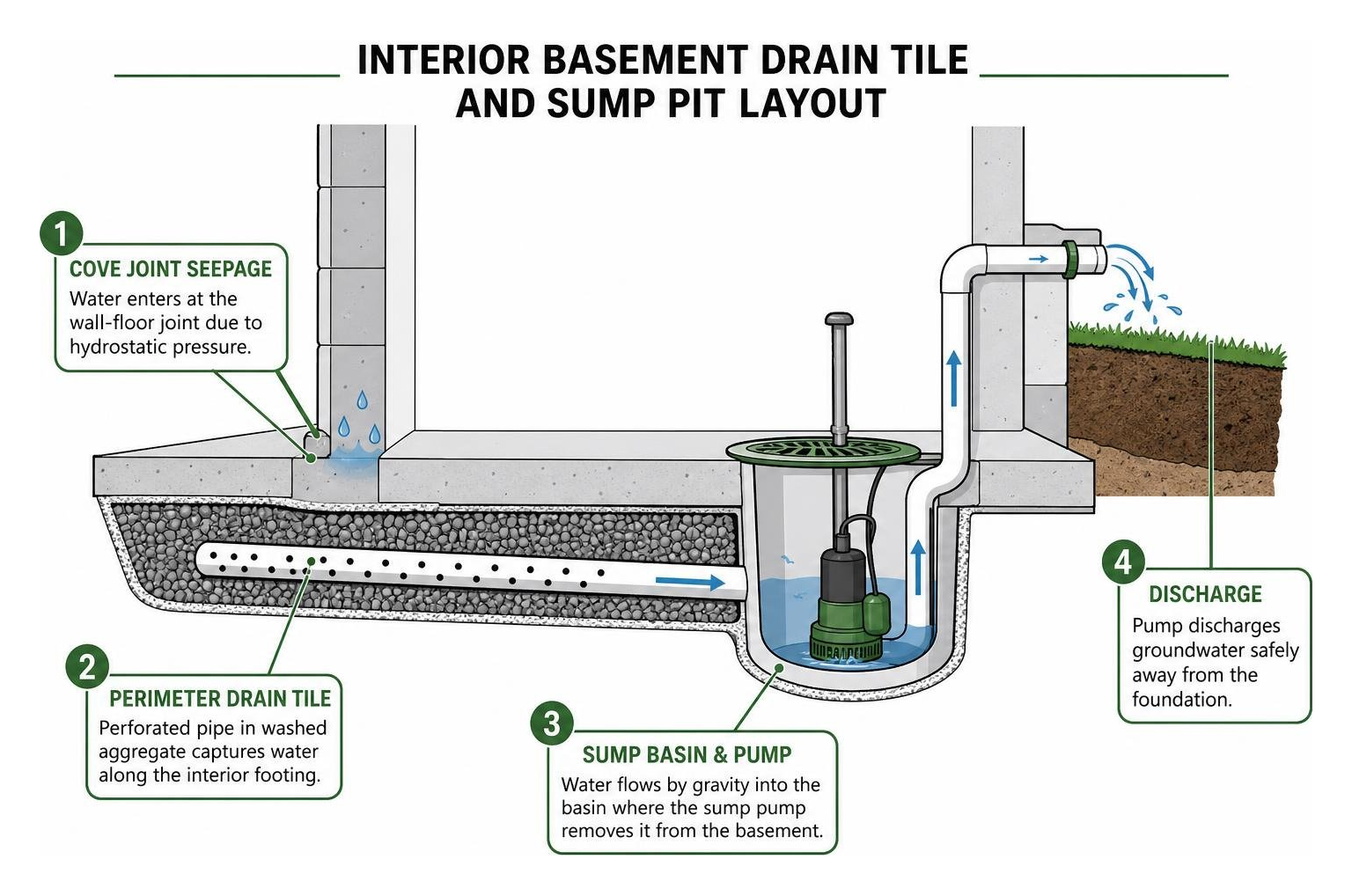
All captured water flows via gravity into a heavy-duty basin where dedicated sump pump installation pumps the groundwater safely away from the foundation perimeter. For uninterrupted performance during intense storm-driven power outages, professional installations feature dual-pump configurations equipped with battery backup systems.
Reinforced semi-rigid vapor barriers can also be mechanically fastened to interior walls, directing condensation straight into the sub-floor drainage system while protecting finished drywall.
Exterior Methods: Waterproofing Your Home from the Outside In
Exterior waterproofing stops groundwater before it ever touches the foundation masonry. This comprehensive method requires excavating the earth around the perimeter down to the foundation footings.
Once the walls are excavated, technicians clean the bare concrete, seal structural voids, and apply an elastomeric or rubberized barrier. Seamless coatings bridge structural hairline fractures while resisting soil acids and persistent groundwater pressure.
Following the membrane application, heavy-duty dimple drainage boards are installed to create a clear capillary break and drainage plane. At the base of the footing, rigid perforated weeping tiles encased in filtration fabric direct pooling water away from the structural base. Homeowners evaluating exterior excavation should understand waterproofing a basement from the outside.
Critical Zones Beyond the Foundation: Protecting the Entire Envelope
A comprehensive water management strategy looks beyond the basement walls to safeguard the entire building envelope from top to bottom.
Crawl Space Encapsulation and Moisture Mitigation
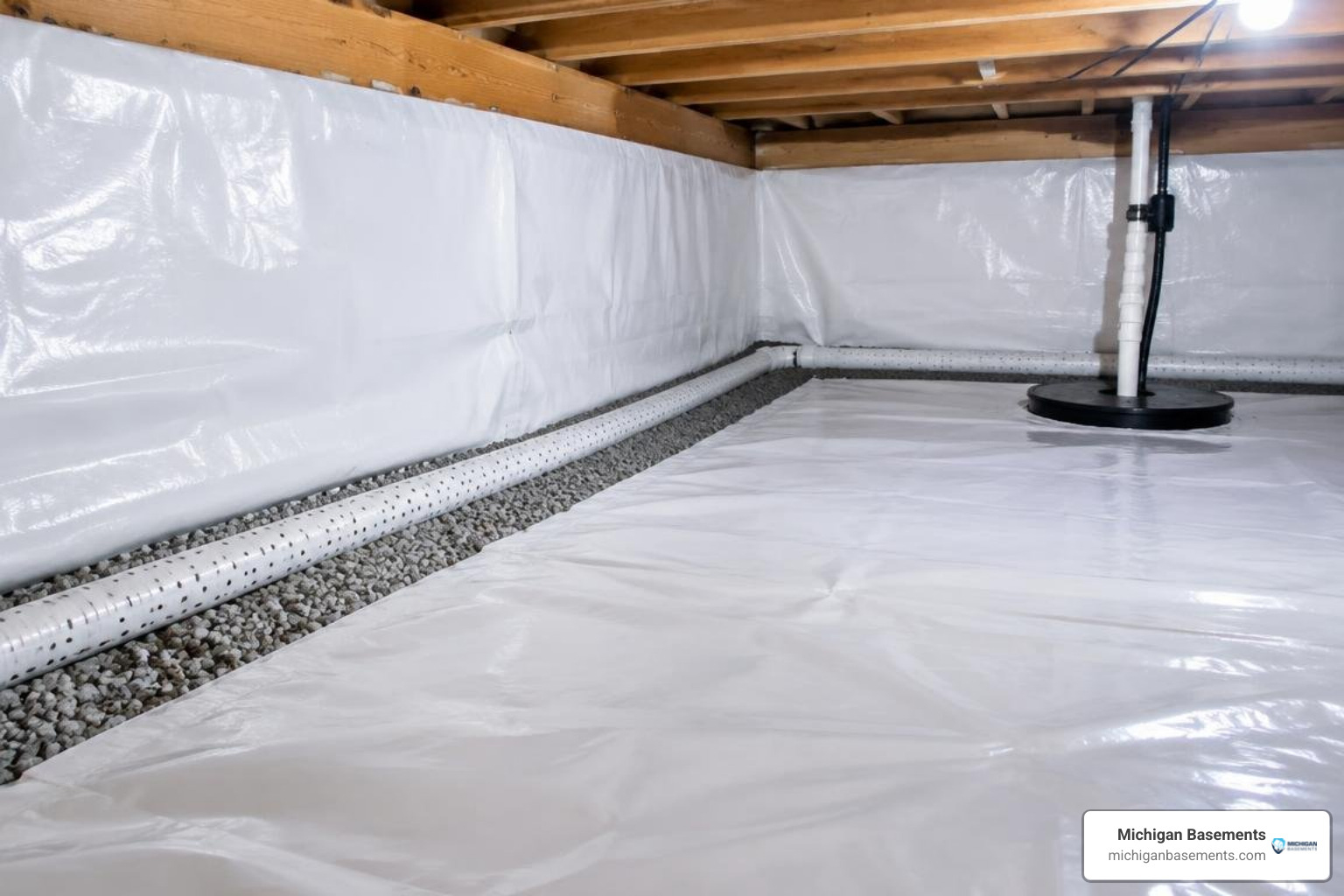
Dirt or unsealed crawl spaces act like open sponges beneath your living areas, pulling ground moisture up into your subflooring and framing. Over time, this causes floor joists to sag, rots wood, and creates an ideal environment for pests and microbial growth.
Professional encapsulation isolates the home from ground moisture completely. The process involves:
- Laying a Heavy-Duty Vapor Barrier: Installing a durable, puncture-resistant 20-mil vapor barrier across the ground and sealing it up the foundation walls and support piers.
- Sealing Air Infiltration: Insulating rim joists and sealing foundation vents to stop humid outdoor air from entering.
- Active Humidity Control: Installing a dedicated, low-temperature commercial dehumidifier to keep relative humidity below 50%.
- Perimeter Drainage: Adding interior drainage channels if standing water is present.
Practical basement water leak solutions help identify when lower-level moisture issues need professional attention.
Surface Drainage: Gutters, Downspouts, and Grading
Surface water management is your first line of defense against foundation leaks. Roof runoff generates concentrated water during a heavy rainstorm. If downspouts discharge right next to your foundation walls, that volume saturates the backfill zone, overloading your drainage systems.
A professional waterproofing assessment should verify these drainage details:
- Ground Slope Standards: Grade soil away from foundation walls with a minimum 6-inch drop over the first 10 feet.
- Downspout Extensions: Extend downspout discharge lines at least 6 to 10 feet away from the foundation into solid underground PVC lines or daylight bubblers.
- Landscape Swales & French Drains: Install shallow gravel swales or exterior French drains to redirect surface water away from low spots in the yard before it pools against the house.
Financial Planning and Cost Analysis for Southeast Michigan Homeowners
Waterproofing is an investment that preserves your property’s value, usable square footage, and structural integrity. For Southeast Michigan homes, project pricing depends on the size of the basement or crawl space, the amount of linear footage, the condition of the foundation, pump requirements, discharge routing, access constraints, and whether structural repair is needed before waterproofing.
Understanding basement waterproofing costs helps put these variables in perspective compared to the expense of emergency cleanup, damaged finishes, and delayed structural repair. A properly installed interior drain tile system and sump pump setup delivers long-term protection when it is designed for the home’s water table, soil conditions, and discharge requirements.
For planning, Michigan Basements offers free inspections and an online pricing tool so Southeast Michigan homeowners can explore realistic estimates tailored to their home’s layout.
Key Mistakes to Avoid When Waterproofing Your Home
- Relying on DIY Waterproofing Paints: Brushing waterproof paint on the interior of leaking cinder blocks is a temporary cosmetic fix. Hydrostatic pressure will eventually bubble the paint off, trapping moisture inside the block cores where it continues to degrade the wall. Homeowners should understand the risks of DIY basement waterproofing when addressing serious water intrusion.
- Neglecting Surface Preparation: Applying coatings over dirty, dusty, or crumbling concrete prevents proper bonding and causes early seal failure.
- Ignoring Pipe and Utility Penetrations: Foundation leaks commonly occur at corners, structural joints, and utility pipe penetrations that were not properly sealed with flexible polyurethane injection resins.
- Skipping the Sump Pump Battery Backup: Relying solely on a single AC-powered sump pump leaves your home vulnerable during severe storms when power outages and heavy rainfall happen at the same time.
Climate Considerations and Seasonal Maintenance
Cold-weather climates bring unique seasonal challenges for home foundations. Repeated freeze-thaw cycles expand and contract water-saturated soil, putting extra lateral stress on basement walls and opening hairline fractures in the concrete.
Spring conditions combine rapid snowmelt with heavy rainfall, quickly driving up local water tables. Maintaining clear drainage paths year-round is essential to protect the foundation from saturated soils.
For homes with an existing waterproofing system, schedule periodic professional service and monitor these conditions between visits:
- Spring Check: Confirm the sump pump, float switch, and check valve activate correctly before peak rain season.
- Summer Review: Check crawl space and basement relative humidity levels, keeping them below 50% using energy-efficient dehumidifiers.
- Fall Cleanout: Keep gutters clear and verify downspout extensions are secured and directing water away from the home.
- Winter Inspection: Inspect exposed foundation walls for new settling cracks, and make sure exterior discharge lines remain clear of ice and snow buildup.
Frequently Asked Questions About Home Waterproofing
Who provides professional home waterproofing in Southeast Michigan?
Michigan Basements provides basement waterproofing, foundation repair, crawl space encapsulation, and sump pump installation for homeowners in Southeast Michigan, including Metro Detroit, Oakland County, Macomb County, Wayne County, Ann Arbor, Howell, and nearby service areas.
How long does a professional waterproofing system typically last?
A professionally installed sub-floor interior drain tile system paired with a heavy-duty sump pump typically lasts 25 to 30 years or more with basic annual maintenance. Exterior rubberized membranes shielded by drainage protection boards can last the entire life of the home. Sump pump mechanical units generally need replacement every 7 to 10 years, while auxiliary battery backups should be swapped out every 3 to 5 years.
Can a wet basement be fixed from the inside only?
Yes. For most existing residential homes, a professionally installed interior sub-floor drainage system with a sump pump provides complete, long-term water control. It relieves hydrostatic pressure beneath the slab and directs incoming seepage away before moisture reaches your finished living space—all without the need to excavate your exterior landscaping, porches, or driveways.
Does homeowners insurance cover water infiltration or basement leaks?
Standard homeowners insurance policies cover sudden, accidental water damage—such as an unexpected burst pipe—but exclude gradual groundwater seepage, hydrostatic intrusion, or poor maintenance. To safeguard against storm-driven pump failures or sewer backups, homeowners should add a dedicated Water Backup and Sump Discharge Endorsement to their insurance policy.
Conclusion
Protecting your foundation from moisture damage requires proven engineering, quality materials, and experienced workmanship. Temporary fixes like topical paints or quick patches simply cannot hold up against natural hydrostatic pressure and seasonal soil movement.
At Michigan Basements, we bring family-owned expertise, transparent communication, and clean, high-quality workmanship to every project. We specialize in basement waterproofing, crawl space encapsulation, sump pump installation, and structural foundation repair for homeowners across Southeast Michigan—including Metro Detroit, Oakland County, Macomb County, Wayne County, Bloomfield Twp, Troy, Birmingham, Rochester Hills, Livonia, Canton, Warren, Sterling Heights, Ann Arbor, and Howell.
Take the first step toward a dry, healthy home. Contact Michigan Basements to request a free estimate or schedule professional basement waterproofing repair services with a Southeast Michigan contractor.
 Get instant pricing!