


Resources
How to Fix Foundation Cracks Safely in 5 Easy Steps
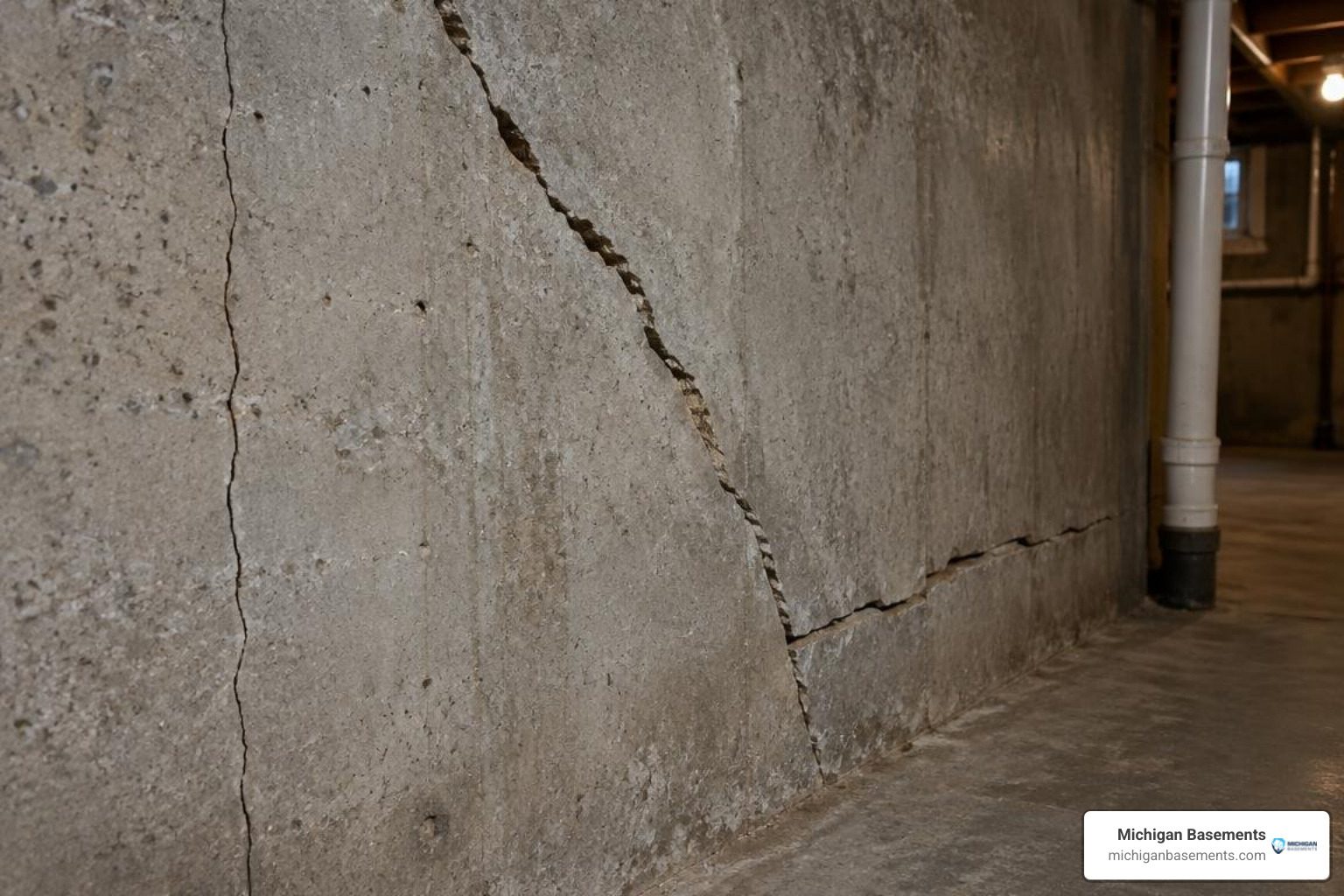
How to Fix Foundation Cracks Safely in 5 Easy Steps
Identifying Basement Crack Types: Minor vs. Structural Risk
To fix foundation cracks permanently, professional foundation contractors prepare the substrate and inject structural epoxy or flexible polyurethane into non-structural fissures, or install engineered carbon fiber straps, wall anchors, or helical piers for structural movement. For Southeast Michigan homeowners in communities like Troy, Ann Arbor, and Warren, choosing the right method begins with identifying crack orientation and structural severity. While vertical hairline shrinkage fractures are primarily moisture pathways, horizontal, stair-step, or displaced cracks indicate deep structural compromise requiring professional foundation stabilization. Concrete naturally shrinks during initial curing, but heavy lateral earth loads, 42-inch frost-heave cycles, and seasonal moisture variations in Michigan clay soils generate major structural fissures.
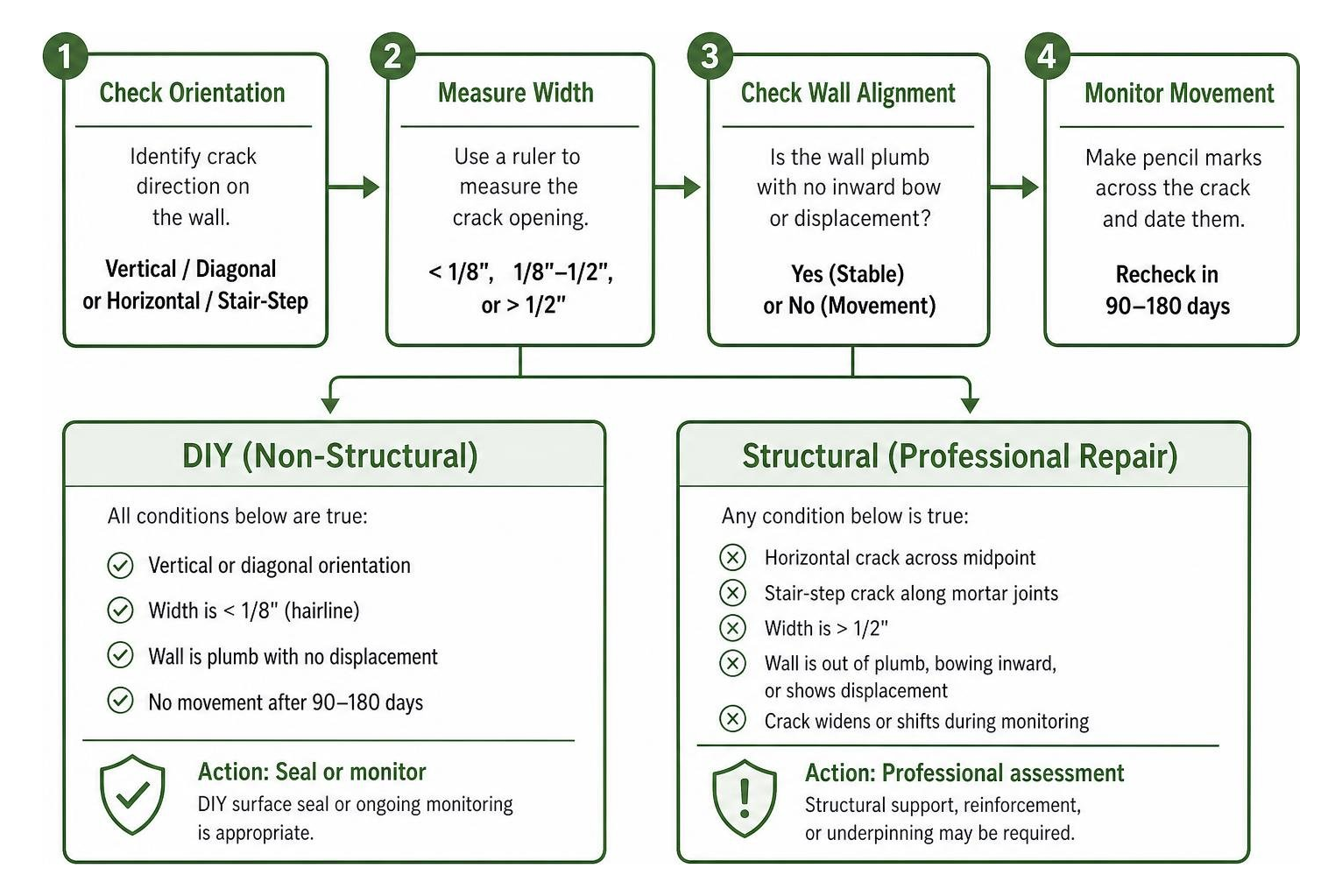
Homeowners can evaluate foundation crack severity by examining crack direction, width, and whether the wall is deflecting inward.
| Crack Type | Typical Orientation | Primary Cause | Severity Level | Professional Repair Method |
|---|---|---|---|---|
| Hairline / Shrinkage | Vertical or diagonal (< 1/16") | Concrete curing process | Low | Professional low-pressure injection |
| Settlement Vertical | Vertical (< 1/4", flat wall) | Minor soil shifting | Moderate | Targeted polyurethane or epoxy injection |
| Horizontal Fracture | Horizontal across midpoint | Hydrostatic lateral pressure | High (Structural) | Carbon fiber straps or wall anchors |
| Stair-Step Crack | Stepped along mortar joints | Differential foundation settling | High (Structural) | Structural underpinning and helical piers |
| Shearing / Inward Bow | Any crack with displaced edges | Heavy lateral earth loads | Critical | Steel I-beams or structural reinforcement |
Non-Structural Settlement and Vertical Fractures
Minor hairline fissures and narrow vertical fractures measuring under 1/8 inch wide are generally non-structural in nature. These openings typically stem from concrete curing shrinkage or minor initial soil settlement around the footing.
When a basement wall remains plumb and flat, a licensed contractor can seal these fractures using low-pressure resin injection. However, if the crack exhibits edge displacement or active widening over time, it indicates ongoing foundation movement that requires a certified structural assessment.
Warning Signs: When Foundation Cracks Require Structural Support
Horizontal fractures, stair-step cracks across concrete masonry unit (CMU) block walls, and wide gaps exceeding 1/2 inch indicate severe lateral soil pressure or foundation settlement. In Metro Detroit and surrounding communities, expansive clay soils absorb heavy precipitation, swelling against foundation walls and pushing them inward.
When lateral earth loads push masonry past its load capacity, repairing bulging basement walls requires engineered carbon fiber reinforcement, wall anchors, or steel support beams. Understanding horizontal wall crack repair helps homeowners recognize the severe structural dynamics involved before scheduling professional stabilization.
Epoxy vs. Polyurethane: Choosing the Right Injection Material
Selecting the proper repair resin is essential to fix foundation cracks permanently. Choosing between structural epoxy and flexible polyurethane depends entirely on whether the crack is completely dry and static, or wet and subject to thermal movement.
Industry standards from the American Concrete Institute demonstrate how material chemistry interacts with moisture and foundation movement.
| Property | Structural Epoxy Injection | Expanding Polyurethane Foam |
|---|---|---|
| Primary Function | Structural bonding and load restoration | Waterproofing and flexible leak sealing |
| Compressive Strength | 10,000 to 12,000 psi (Stronger than concrete) | Non-structural elastomeric barrier |
| Moisture Tolerance | Must be 100% dry; fails on wet concrete | Hydrophilic; activates directly with water |
| Expansion Ratio | 1:1 (No expansion; fills voids via pressure) | Expands 5x to 20x original liquid volume |
| Flexibility | Rigid and inflexible once cured | Flexible; tolerates minor thermal movement |
| Typical Cure Time | 2 to 8 hours | 30 to 60 minutes after expansion |
Structural Bonding With Epoxy Injection Kits
High-strength epoxy resin is engineered to restore the physical integrity of poured concrete. Structural epoxy boasts compressive strengths between 10,000 and 12,000 psi, easily exceeding the 3,000 to 4,000 psi compressive strength of standard residential basement concrete.
Epoxy welds the concrete surfaces together into a monolithic unit. However, epoxy requires a completely dry environment. If concrete pores contain residual moisture, epoxy cannot achieve a secure mechanical bond and will delaminate under pressure.
Waterproofing Active Leaks With Expanding Polyurethane Foam
Hydrophilic polyurethane resin is the industry standard for stopping water infiltration through non-structural cracks. Upon contact with water, polyurethane undergoes a rapid chemical reaction, expanding 5 to 20 times its original liquid volume to form a resilient, closed-cell foam gasket.
Because polyurethane remains permanently flexible, it accommodates minor thermal expansion, seasonal frost heave, and soil movement without tearing. It can be injected directly into actively leaking fissures to stop rushing water immediately.
How Professional Contractors Fix Foundation Cracks in 5 Steps
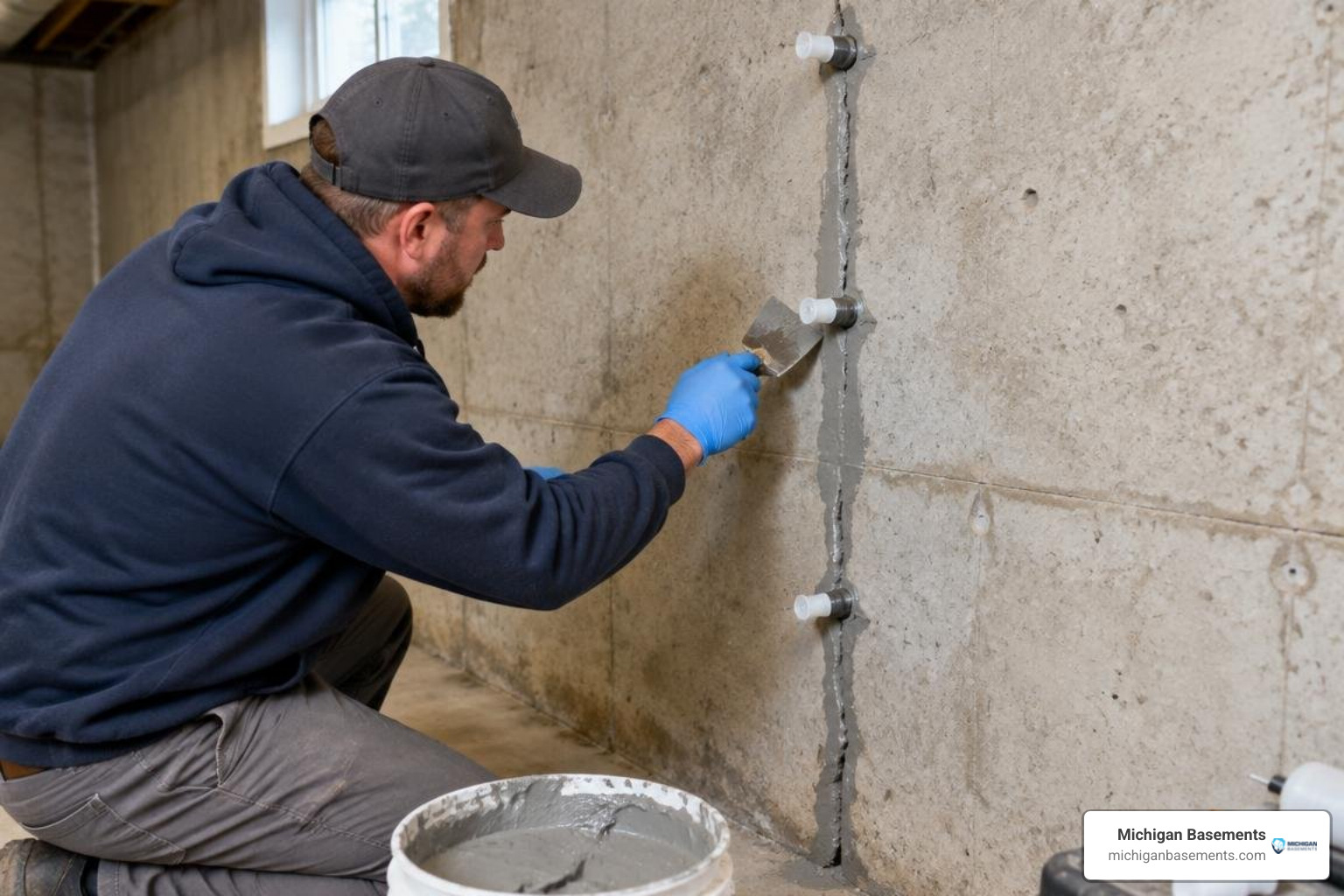
When repairing vertical or settlement fractures in poured concrete walls, licensed foundation specialists follow strict industry standards. Understanding the difference between surface sealing and commercial injection highlights why professional execution outperforms standard DIY surface repairs.
Step 1: Substrate Preparation and Mechanical Cleaning
- Technicians clear the fracture zone of efflorescence, dirt, old coatings, and loose concrete using commercial wire equipment.
- Stubborn mineral buildup is mechanically removed to ensure an uncompromised bonding substrate.
- Technicians vacuum all concrete dust and fine particles using HEPA-filtered extraction units.
- The concrete surface is cleaned and prepared to guarantee full adhesion for commercial-grade epoxy pastes.
Step 2: Precision Port Placement and Surface Capping
- Injection ports are set directly over the crack at precise intervals matched to wall thickness (typically 8 to 10 inches apart on standard 8-inch basement walls).
- Commercial two-part high-strength epoxy paste is applied around each port base without obstructing the central port opening.
- The entire face of the fracture between ports is sealed with a continuous epoxy paste barrier.
- The surface paste cures completely to create a pressurized containment seal capable of holding injection pressure.
Step 3: Pressurized Resin Injection and Cavity Saturation
- Dual-cartridge commercial injection equipment delivers specialized structural epoxy or hydrophilic polyurethane resin.
- Injection starts at the lowest port, using calibrated low-to-medium pressure to force material through the entire depth of the wall.
- Material flows continuously until resin emerges from the next port above, proving full cross-sectional penetration to the exterior soil line.
- Technicians cap each port sequentially, moving upward until the entire vertical crack is saturated from base to top.
- The chemical resin cures into a solid, monolithic weld or closed-cell elastomeric gasket.
Step 4: Port Removal and Wall Detailing
- After full cure, protruding injection port stems are mechanically removed flush with the wall surface.
- Technicians grind down rough epoxy ridges or sharp edges to restore a clean finish.
- A protective concrete skim coat or smoothing compound is applied over port sites when aesthetic wall finishing is required.
Step 5: Moisture Testing and Long-Term Warranty Verification
- Technicians perform electronic moisture-meter readings across the repair zone to confirm water cutoff.
- Foundation specialists review wall alignment and verify that no secondary structural shifting is present.
- The contractor issues official warranty documentation protecting the homeowner against future leakage.
Southeast Michigan homeowners in Oakland, Wayne, and Macomb Counties can schedule a free foundation inspection to determine the exact repair approach for their property.
Exterior Drainage and Prevention Strategies
Sealing an internal foundation crack stops water entry at that specific point, but it does not remove the underlying source of hydrostatic pressure. Implementing effective foundation protection strategies mitigates moisture loads outside the basement perimeter.
A foundation crack as narrow as 1/8 of an inch can allow persistent water intrusion into a basement during heavy rainstorms. Left unchecked, unmitigated moisture penetration leads to structural deterioration, indoor air quality issues, and finish damage.
Best Practices to Fix Foundation Cracks Caused by Hydrostatic Pressure
- Gutter Maintenance: Clean roof gutters twice annually to prevent overflowing stormwater from cascading directly next to the basement perimeter.
- Downspout Extensions: Install solid 4-inch PVC or metal downspout extensions that discharge roof water at least 6 to 10 feet away from foundation walls.
- Surface Grading: Grade the perimeter soil to create a minimum slope of 6 inches of fall over the first 10 feet away from the home.
- Exterior Drainage Systems: For persistent water accumulation, install exterior French drains and waterproof exterior membranes ($8,000 to $30,000 depending on excavation scope) or full interior perimeter sub-floor drain tile systems ($3,000 to $8,000) routed to a high-capacity sump pump.
Frequently Asked Questions About Foundation Crack Repair
What is the cost of professional foundation crack repair in Southeast Michigan?
Professional polyurethane or structural epoxy injection for a standard vertical foundation crack typically ranges from $500 to $1,200 per crack, depending on accessibility, depth, and water activity. If a crack involves lateral bowing or masonry stair-stepping, structural reinforcement using carbon fiber straps or steel I-beams generally ranges from $4,000 to $12,000 or more. Professional repairs include certified structural assessments, commercial-grade injection materials, and transferable warranty protection. Homeowners can evaluate additional solutions for fixing foundation cracks before scheduling an on-site structural evaluation.
How long do professional foundation crack repairs last?
When executed by a licensed contractor using commercial structural epoxy on dry concrete, the repair creates a permanent, monolithic bond that lasts 20 to 30+ years—often exceeding the lifespan of the surrounding concrete. Hydrophilic polyurethane injections provide a flexible, waterproof seal designed to last 15 to 25 years while accommodating seasonal freeze-thaw cycles in Michigan soils.
Can foundation crack repairs be performed during Michigan winters?
Yes, professional foundation crack injections can be performed throughout the winter in Southeast Michigan as long as basement ambient temperatures remain at or above 40°F to 50°F. Professional contractors utilize specialized rapid-curing resins formulated for cold-weather applications. Structural inspections and interior injection repairs proceed year-round without requiring exterior excavation in frozen soil.
Conclusion
Minor, non-structural vertical foundation cracks can often be managed through careful surface prep, appropriate resin selection, and professional low-pressure injection. However, fractures caused by shifting clay soils, inward wall bowing, or horizontal shearing require engineered structural intervention.
Michigan Basements provides industry-leading basement waterproofing, crawl space encapsulation, and foundation repair services across Southeast Michigan—including Oakland, Macomb, Wayne, Livingston, Washtenaw, Genesee, and Lapeer Counties. Our team delivers zero-cost structural inspections, clean workmanship, and permanent solutions tailored to local soil conditions.
To evaluate repair costs for your home, explore our transparent online pricing tool or request a free estimate today to speak with a local foundation repair specialist.
 Get instant pricing!