


Resources
How to Fix Basement Water Leaks on a Budget
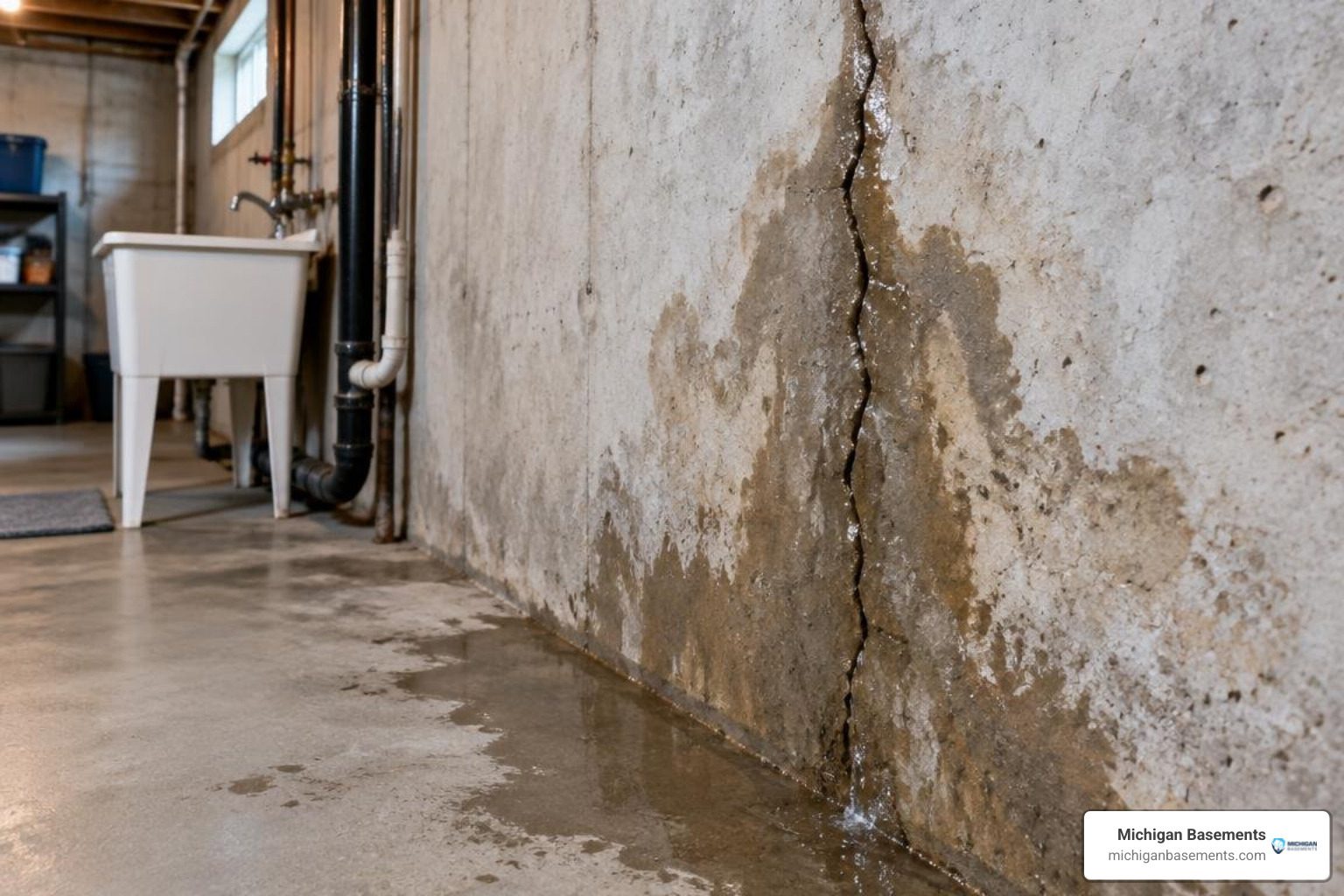
How to Fix Basement Wall Leaks Without Wasting Money
To fix basement wall leaks cost-effectively, homeowners must address exterior drainage issues—like clearing gutters and extending downspouts—while resolving underlying foundation vulnerabilities through targeted commercial repairs such as professional crack injection or interior drainage systems. Avoiding surface paints that peel under hydrostatic pressure prevents wasted money. For Southeast Michigan homeowners, Michigan Basements provides no-cost inspections to determine whether your foundation requires an isolated crack repair or a comprehensive waterproofing system. Request a free estimate today to protect your foundation.
I’m Dominic Hesano, founder of Michigan Basements, and I’ve spent years waterproofing basement wall surfaces and diagnosing foundation leaks across Southeast Michigan. My team offers no-cost inspections to help homeowners understand the most durable, cost-effective solutions for their basements.
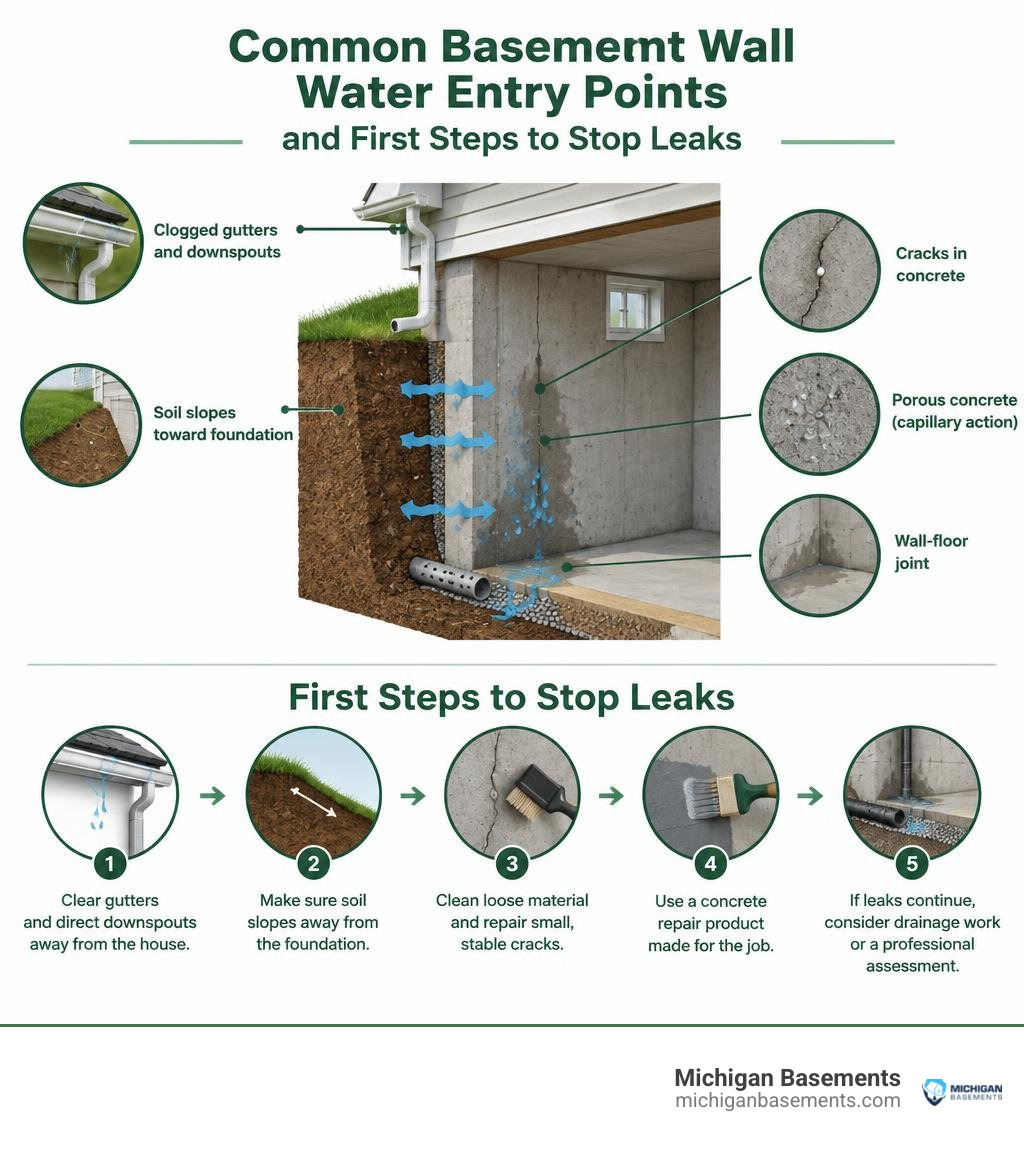
Identifying the Causes of Basement Wall Leaks
Water entering your lower level rarely occurs without warning. When water intrudes through concrete or masonry, it exploits the path of least resistance. In places like Oakland County and Wayne County, heavy rain and winter snowmelt saturate the ground, forcing moisture into porous concrete through capillary action. Capillary action is the physical process where concrete draws in groundwater like a sponge, pulling dampness up and across your foundation.
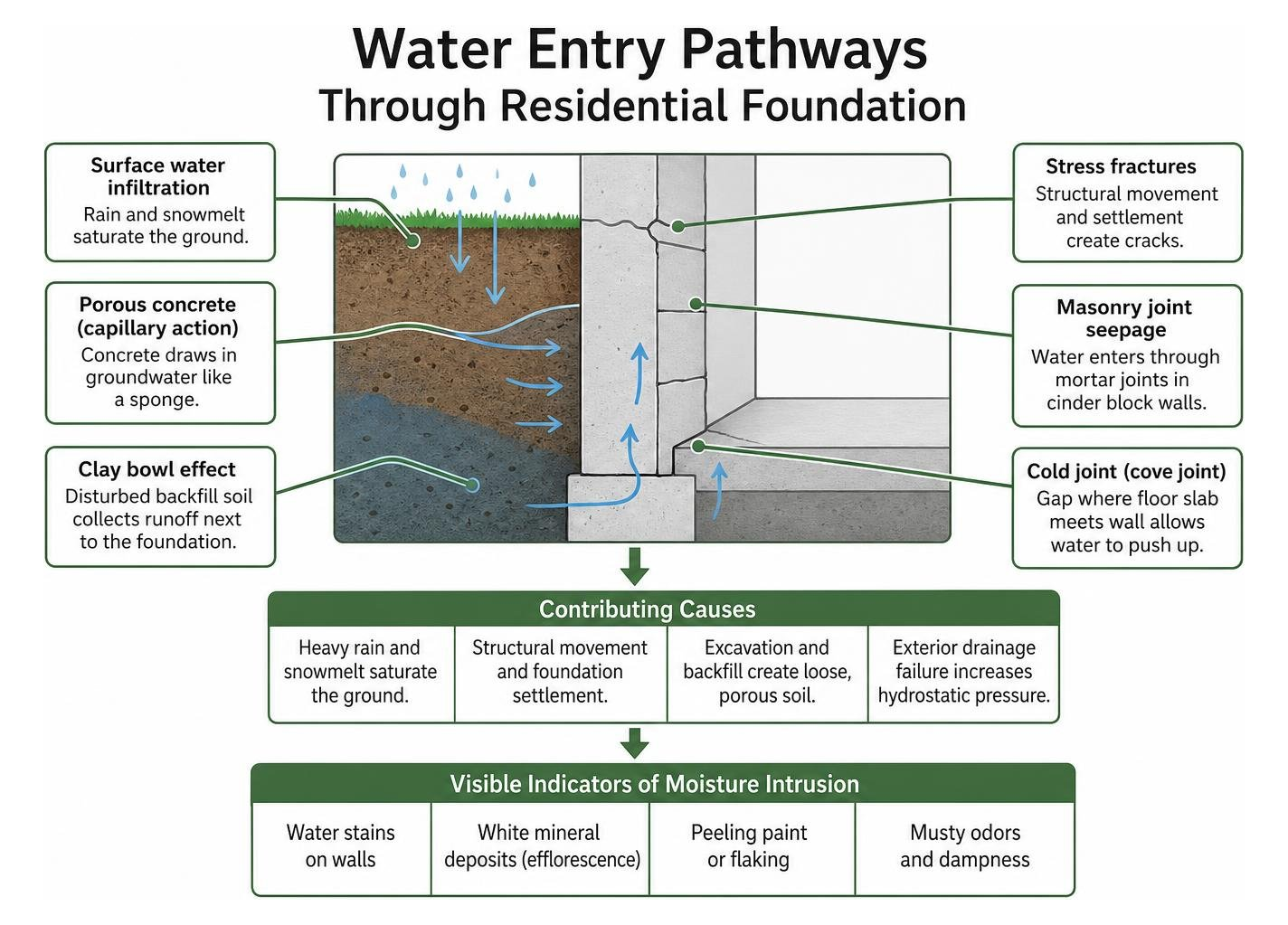
Structural movement and natural foundation settlement also trigger leaks by creating stress fractures in solid poured walls or along mortar joints in cinder block assemblies. Another critical vulnerability is the cold joint where your poured floor slab meets the vertical wall. To avoid persistent seepage, diagnosing a leaky basement cove joint is vital because water often pushes upward through this gap when the exterior drainage fails.
Excavation history also plays a significant role. When a home is built, contractors dig an oversized hole, build the foundation, and backfill the perimeter with loose soil. This creates the “clay bowl effect.” The disturbed backfill soil remains more porous than the surrounding undisturbed earth, acting as a subterranean reservoir that collects runoff right next to your home.
Visible indicators of moisture intrusion include:
- Efflorescence: A white, powdery mineral deposit left behind on concrete when moisture evaporates.
- Damp spots and discoloration: Dark staining along lower wall panels and corners.
- Musty odors: Earthy smells produced by active mold and mildew colonies thriving in damp, dark environments.
- Flaking paint or crumbling masonry: Spalling caused by internal moisture pushing outward against cosmetic surface coatings.
Hydrostatic Pressure and Soil Mechanics
The primary force driving groundwater through foundation walls is hydrostatic pressure. When heavy rains hit dense clay soils—common throughout Macomb County and Livingston County—the soil becomes completely saturated. Water weighs roughly 62.4 pounds per cubic foot. When trapped against a foundation, the lateral hydrostatic pressure on a 6-foot basement wall hitting saturated soil can easily exceed 1,800 pounds per linear foot.
This immense load pushes liquid water through microscopic pores, tie-rod holes, and hairline fissures. During Michigan winters, frost depth and freeze-thaw cycles compound the problem. Saturated soil expands when frozen, exerting extreme lateral pressure against the foundation, only to thaw rapidly in the spring and release thousands of gallons of water directly against the exterior masonry. To combat these intense underground forces, modern building practices rely on comprehensive exterior protections, such as building enclosure drainage sheet standards that provide an uninterrupted capillary break and drainage path down to the footing.
Surface Water and Exterior Drainage Failures
Before investing in interior repairs, examine your exterior roof runoff and grading systems. The vast majority of basement moisture problems originate on the roof or at ground level immediately adjacent to the foundation:
- Clogged or undersized gutters: Overflowing gutters dump hundreds of gallons of water directly against your foundation perimeter during every rainstorm.
- Short downspouts: Downspouts discharging water less than 10 feet from the foundation wall feed the clay bowl effect.
- Improper soil grading: Soil should slope away from your foundation at a minimum 2% to 5% grade (dropping at least 6 inches over the first 10 feet).
- Unprotected window wells: Debris-filled or poorly drained window wells collect standing water, which seeps through window seals and basement walls.
Professional Methods for Waterproofing Basement Walls
Managing foundation moisture effectively requires engineered solutions rather than cosmetic surface paints. Southeast Michigan homeowners evaluating how to stop water from seeping through basement walls benefit most from understanding how certified contractors diagnose, prepare, and seal leaking foundation masonry.
Professional waterproofing technicians utilize specialized tools and heavy-duty materials to ensure lasting repairs:
- Rotary hammer drills and masonry chisels for precision joint and crack widening
- High-pressure polyurethane injection pumps and dual-component epoxies
- Fast-setting hydraulic compounds and commercial crystalline sealants
- HEPA-filtered dust extraction vacuums and personal protective equipment
- Commercial-grade dehumidification and moisture metering equipment
Preparing for Waterproofing Basement Wall Surfaces
Proper surface preparation determines whether a foundation repair permanently stops water or fails prematurely. Waterproofing compounds cannot bond to contaminated, flaking, or efflorescence-covered concrete.
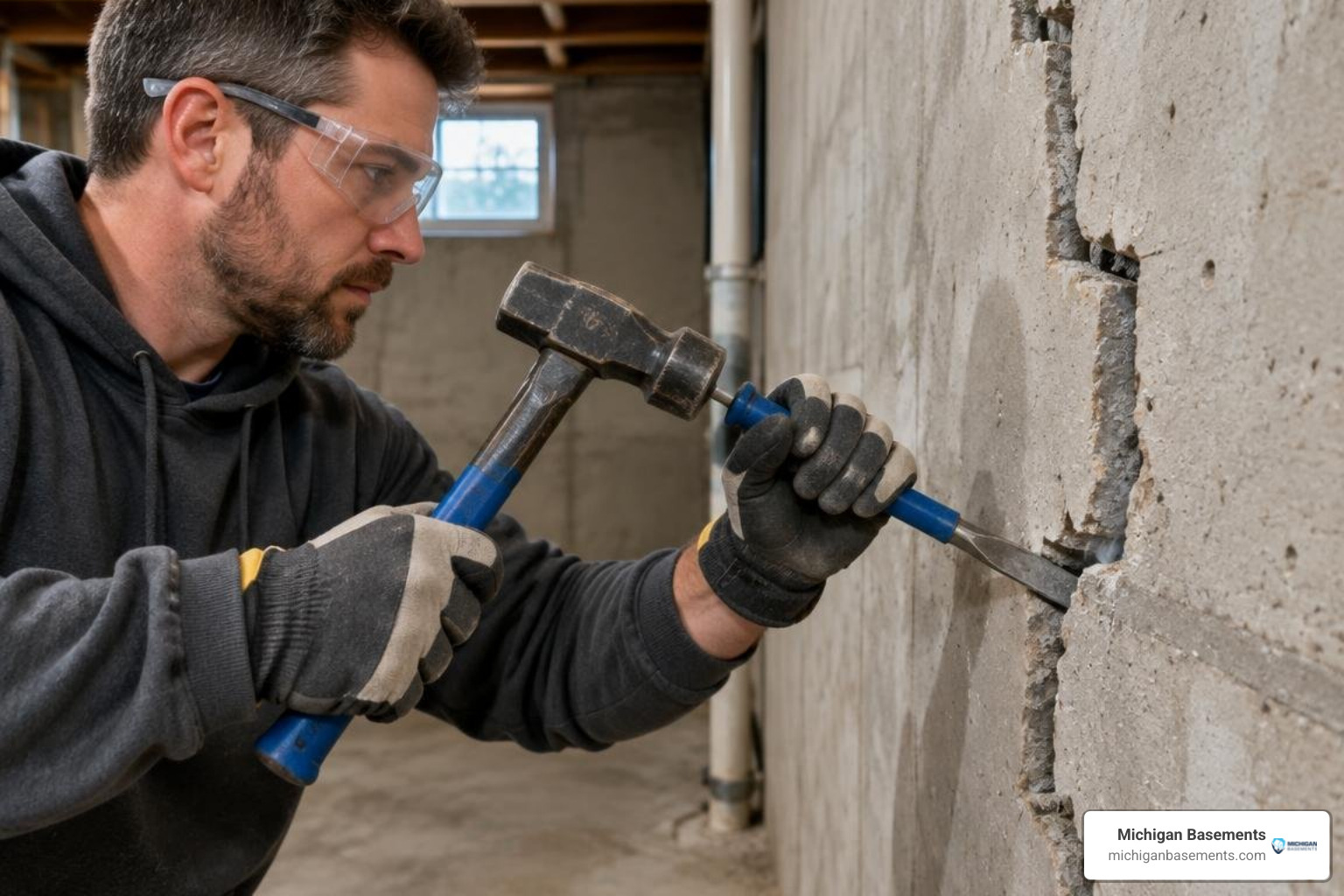
- Substrate Cleaning: Technicians thoroughly scrub the masonry to remove loose cement, mineral efflorescence, and failing cosmetic coatings. Efflorescence must be eliminated because expanding salt crystals destroy surface bonds.
- Crack Preparation (Dovetail Chiseled Profiling): When repairing localized seepage, contractors widen the crack to a depth and width of approximately 3/4 inch, creating an inverted “V” or dovetail groove. This mechanical shape permanently locks repair compounds into the wall.
- Debris Extraction: Industrial vacuums clear fractured concrete dust, exposing sound, porous aggregate ready for sealant adhesion.
Sealing Active Leaks and Foundation Cracks
When water actively seeps through masonry fractures, standard caulks wash out before curing. Contractors deploy specialized hydraulic expanding compounds or high-pressure polyurethane injections.
When executing professional concrete basement wall repairs:
- Hydraulic Plugging: Fast-setting hydraulic cement expands rapidly within the dovetail cavity, creating an immediate physical block against active water intrusion.
- High-Pressure Injection: For poured concrete walls, technicians inject flexible polyurethane foam through mechanical ports. The polymer expands up to 20 times its volume, filling the crack completely from the inside face to the exterior soil.
- Flush Finishing: Technicians smooth the repair flush with the surrounding foundation wall for a clean, stable surface.
Commercial Interior Barrier Applications
Once active leaks and fractures are sealed, secondary interior treatments help reduce vapor transmission and manage ambient moisture levels.

Contractors evaluate two primary commercial interior barrier applications:
- Penetrating Silicate Sealers: Deep-penetrating sodium or lithium silicates react chemically with concrete lime to form insoluble crystalline barriers up to 4 inches deep within the pores. Because they become integral to the concrete matrix, silicates never peel or blister under vapor pressure.
- Commercial Waterproof Coatings: Applied to unpainted masonry, breathable vapor coatings manage dampness and brighten lower-level spaces without creating trapped moisture pockets behind elastic films.
Maintaining a dry space also involves knowing how to prevent condensation on basement walls by managing indoor relative humidity and preventing warm air from contacting cold basement masonry.
Comparing Cost-Effective Interior vs. Exterior Waterproofing Solutions
Every waterproofing approach has trade-offs in upfront investment, labor intensity, and long-term durability. Understanding the basement waterproofing cost breakdown helps homeowners make practical choices for their budget.
| Waterproofing Method | Typical Cost Range | Primary Function | Expected Lifespan | Best Used For |
|---|---|---|---|---|
| Interior DIY Sealants & Paints | $50 – $500 (Materials) | Reduces moisture vapor and minor dampness | 1 – 5 Years | Low-humidity basements with zero standing water |
| Professional Crack Injection | $400 – $1,500 per crack | Fills full wall thickness with flexible polyurethane/epoxy | 10 – 20+ Years | Isolated settling cracks in poured concrete walls |
| Interior Drainage & Sump Pump | $3,000 – $8,000 | Captures cove joint seepage and relieves water table pressure | 25 – 30+ Years | Chronic groundwater pressure, finished living areas |
| Exterior Waterproofing & Footing Drain | $8,000 – $30,000 ($80–$200/linear ft) | Stops water before it ever contacts the foundation wall | 30 – 50+ Years | Severe water problems, extensive masonry deterioration |
- Interior Drainage Systems: Installing an interior perimeter drain tile along the footing connected to a modern sump pump is the most dependable, cost-effective solution for persistent water intrusion. It manages incoming water without requiring full exterior excavation.
- Exterior Waterproofing: While comprehensive exterior excavation, dimpled membranes, and footing drains offer the highest protection, they are significant investments. They are best suited for major structural restorations or exterior foundation rebuilds.
When to Hire a Foundation Repair Professional
For Southeast Michigan homeowners, basic exterior maintenance tasks like clearing gutters and extending downspouts are helpful first steps. However, any work involving structural fractures, hydrostatic groundwater pressure, or interior drainage should always be entrusted to a licensed foundation contractor. Improper repairs can trap water within the masonry, accelerate foundation degradation, and cause severe structural damage.
Homeowners should understand why to avoid DIY basement waterproofing when structural settlement or heavy soil loads are present. Saturated clay soil exerts massive lateral pressure that causes basement walls to bow inward, crack horizontally across mortar joints, or shear along the footing.
Contact a professional contractor immediately if you observe:
- Horizontal or stair-step cracks in cinder block or brick foundation walls.
- Inward bowing or deflection along the middle or lower section of the wall.
- Continuous groundwater seepage surging through floor cracks or the cove joint.
- Uneven settlement causing upper-floor doors and windows to jam.
Reviewing how much it costs to waterproof a basement helps homeowners evaluate permanent engineered solutions against recurring temporary fixes. For an accurate assessment, request a free estimate from Michigan Basements today.
Frequently Asked Questions
Can waterproof paint permanently fix a leaking basement wall?
No. Waterproof masonry paints and sealants provide temporary moisture-vapor containment, but they cannot withstand active hydrostatic pressure pushing from the outside. Saturated soil pushes groundwater through the wall, causing waterproof paints to eventually bubble, blister, and peel. Waterproof coatings should be viewed as cosmetic damp-proofing layers on dry walls rather than permanent structural fixes for active water intrusion.
What is the most effective way to stop water coming through a basement wall?
The most permanent way to stop water intrusion is combining exterior surface water management with a dedicated interior drainage system and professional polyurethane crack injection. Redirecting downspouts and grading soil away from the foundation relieves initial saturation, while engineered pressure-relief drainage prevents groundwater from reaching the basement walls.
How do I know if a basement wall crack is structural?
Hairline vertical cracks in poured concrete are typically non-structural shrinkage cracks caused during the curing process. In contrast, horizontal cracks across the middle third of a wall, stair-step cracks following mortar joints in concrete block, or any wall bowing inward more than 1/4 inch are severe structural red flags. These indicate that lateral soil pressure has exceeded the wall’s load capacity, requiring professional structural reinforcement.
Conclusion
Waterproofing basement walls on a budget begins with sensible moisture management: redirecting surface water away from the exterior, sealing isolated hairline cracks with hydraulic cement, and keeping basement humidity levels below 50% to prevent mold and wood rot.
However, surface patches cannot solve chronic hydrostatic pressure, cove joint seepage, or structural shifting. Temporary fixes on compromised foundations only lead to more costly repairs down the road.
If your home in Southeast Michigan—including Bloomfield Township, Troy, Sterling Heights, Livonia, or Warren—is dealing with persistent moisture, bowing walls, or recurring leaks, partner with a trusted local expert. Michigan Basements is a family-owned company specializing in complete basement waterproofing, crawl space encapsulation, and foundation stabilization. We provide clean workmanship, clear customer communication, and honest assessments.
We offer no-cost, no-obligation inspections across Metro Detroit and Southeast Michigan. You can also explore project costs using our online pricing tool. Contact our team today for professional repair for cracked basement walls and keep your home safe, dry, and structurally sound. Request your free estimate to get started.
 Get instant pricing!