


Resources
The Real Cost of Tanking a Cellar Revealed

The Real Cost of Tanking a Cellar Revealed
What Does Basement Tanking Actually Cost?
Basement tanking cost is one of the first things homeowners want to know before committing to a waterproofing project — so here’s a straight answer before we go any deeper.
Quick Cost Summary for Basement Tanking (2026)
| System Type | Cost Per m² | Typical Total Cost |
|---|---|---|
| Basic cementitious slurry (Type A) | £90 – £140 | £4,000 – £7,000 |
| Enhanced barrier with render | £120 – £170 | £5,000 – £9,000 |
| Full cavity membrane system (Type C) | £120 – £220 | £8,000 – £14,000 |
| Sump pump installation | – | £1,500 – £3,500 |
| Full cellar conversion (all-in) | £1,000 – £1,750/m² | £10,000 – £30,000+ |
Most homeowners pay somewhere between £6,000 and £14,000 for a mid-sized basement, depending on the system chosen, the condition of the structure, and whether a sump pump is needed.
Those numbers can move significantly based on hidden prep costs, structural repairs, and the water table under your home — which is exactly why so many initial quotes end up looking nothing like the final bill.
A damp cellar isn’t just uncomfortable. It’s a slow drain on your property’s structural integrity and resale value. Water finds every weakness — cracked mortar, porous brick, aging concrete — and over time, what starts as a musty smell or blistering paint becomes a much more serious (and expensive) problem.
I’m Dominic Hesano, owner of Michigan Basements, and I’ve spent years diagnosing wet basements and failed waterproofing across Southeast Michigan — including every scenario where an underpriced job turned into a costly repeat repair. That hands-on experience with basement tanking cost and real-world water management is what shapes everything in this guide.
What is Basement Tanking vs. Waterproofing?
To understand your quote, we first need to clear up some industry terminology. While people often use the terms interchangeably, there is a technical distinction: all tanking is waterproofing, but not all waterproofing is tanking.
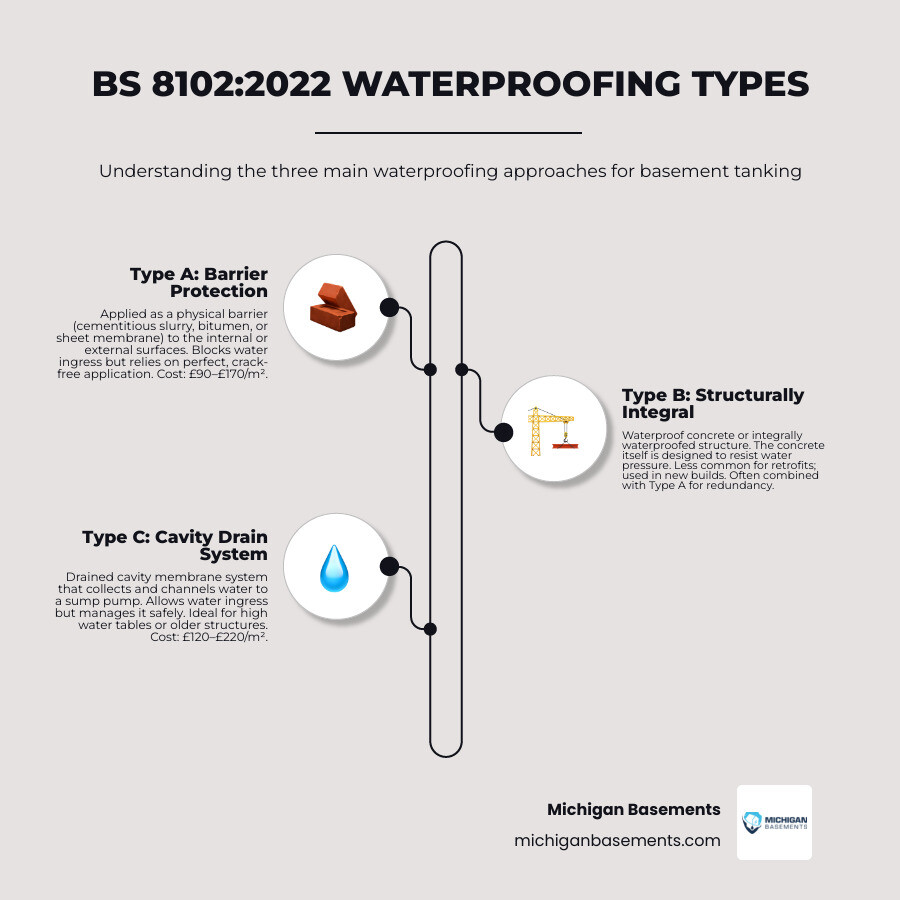
In the industry, particularly under the British Standard BS 8102:2022 (the code of practice for protecting below-ground structures against water), waterproofing is divided into three main types:
- Type A (Barrier Protection): This is what is traditionally called “tanking.” It involves applying a continuous, impermeable barrier directly to the internal or external surfaces of the basement walls and floor. This physical barrier—usually a cementitious slurry or a liquid-applied bitumen coating—physically blocks water from entering the masonry.
- Type B (Structurally Integral Protection): This relies on the design and materials of the building itself (such as water-resistant concrete and water bars in the joints) to prevent water penetration.
- Type C (Drained Protection): Instead of trying to hold back hydrostatic pressure, Type C systems accept that water will penetrate the outer walls. They use a dimpled plastic cavity drain membrane to capture incoming moisture, channel it through perimeter baseboard conduits, and direct it safely to a sump pump system to be pumped away.
If you are looking to create a completely dry, habitable space (like a home office, gym, or bedroom), rely on a clear understanding of What is Basement Waterproofing to make the right design choice. While a basic Type A slurry might suffice for a storage cellar with light dampness, high-risk structures or habitable conversions often require a Type C cavity drain system—or even a combined “belt-and-braces” hybrid approach.
As explored in detail by What Does Waterproofing Cost in 2025? – APP Protect , opting for the wrong system for your specific water table risk is one of the most expensive mistakes a homeowner can make, often resulting in complete system failure.
Understanding the Total Basement Tanking Cost in 2026
When calculating your potential investment in 2026, you must look beyond “ballpark” figures. The final bill is dictated by the total surface area of your walls and floor, not just the floor footprint. For example, a basement split into multiple small rooms has a significantly higher wall-to-floor ratio than an open-plan space, meaning it requires more materials and labor.
Most homeowners can expect the following baseline ranges for the physical installation of the waterproofing system:
| System Type | Cost per Square Metre | Typical Total for 40 m² Space |
|---|---|---|
| Cementitious Slurry (Type A) | £90 – £140 / m² | £4,000 – £7,000 |
| Enhanced Barrier (with renders) | £120 – £170 / m² | £5,000 – £9,000 |
| Cavity Drain Membrane (Type C) | £120 – £220 / m² | £8,000 – £14,000 (including pump) |
For a complete picture of structural options, you can read Basement Tanking Cost UK 2026: Prices, Pumps & Labour | BookaBuilderUK.com . If you are budgeting for a project in the United States, particularly across Southeast Michigan, you can compare these rates to local standards using our guide on How Much to Waterproof a Basement. In the US market, a professional interior waterproofing project typically ranges from $6,000 to $15,000, which aligns closely with these international standards when adjusted for local labor and equipment.
How Material Choices Impact Your Basement Tanking Cost
The specific products specified for your project have a direct impact on the bottom line. Let’s break down the material-only costs that contractors factor into their bids:
- Tanking Slurry: Raw cementitious slurry is relatively inexpensive, costing around £9 per m², though specialized slurry bags run between £20 and £50 each depending on performance specifications.
- Plastic Membranes: High-density polyethylene (HDPE) cavity drain membranes cost between £10 and £20 per m² for the raw materials.
- Vapor Barriers (Encapsulation): For crawl spaces or floor-only barriers, the thickness of the plastic sheet is paramount. A cheap 6-mil polyethylene barrier is fragile and prone to tearing. For a permanent solution, we recommend a 20-mil reinforced polyethylene barrier with a woven scrim core, which costs roughly £1.80 to £2.40 per square foot ($1.80 to $2.40/sq ft) in materials alone.
- Sump Pump Systems: A high-quality sump pump system—crucial for any Type C setup—costs between £1,500 and £3,500 ($1,500 to $3,500) installed, depending on whether it includes dual pumps, battery backups, and smart high-water alarms.
To see how these component costs distribute in a professional encapsulation project, refer to the breakdown in Basement Encapsulation Cost: What You Should Actually Pay in 2026 – D and G Flooring .
Labour Rates and Project Timelines in 2026
Labor typically accounts for 50% to 65% of your total basement tanking bill. In 2026, daily rates for tradespeople reflect the specialized nature of structural waterproofing:
- General Builders / Contractors: £180 to £280 per day.
- Waterproofing Specialists (CSSW-certified): £220 to £350 per day.
- Electricians (for pump and alarm wiring): £250 to £400 per day.
A basic slurry tanking job for a small, well-prepared cellar can be completed in 1 to 2 days. However, a comprehensive Type C cavity membrane installation with drainage channels, sump pump installation, and wall reinstatement typically takes 3 to 7 days. If structural repairs or extensive plaster removal are required, timelines can stretch to 2 or 3 weeks.
Key Factors That Drive Waterproofing and Tanking Prices
Your property’s unique structural characteristics and environmental conditions dictate your final quote far more than any generic pricing guide.
- Water Table and Ground Conditions: Homes built in low-lying areas or sitting on clay-heavy soils (which are highly common across Metro Detroit, Oakland County, and Macomb County) experience intense hydrostatic pressure. This pressure forces water through the smallest masonry pores, making cheap Type A slurry systems highly prone to failure. These environments demand a robust Type C system with active pumping.
- Access and Head Height: If your basement has limited headroom or tight, winding stairs, moving materials in and excavated dirt out takes longer, driving up labor costs.
- Intended Use: Waterproofing a cellar simply to keep storage boxes dry requires a lower level of finish than converting a damp basement into a habitable bedroom or home theater, which requires absolute dryness, insulation, and compliance with local building codes.
To explore the full scope of professional solutions tailored to these conditions, browse Our Services.
Practical Ways to Reduce Your Tanking Bill
If you want to keep your project budget-friendly without sacrificing structural quality, consider these strategic steps:
- Handle the Prep Work Yourself: Clearing out the basement, removing old shelving, and cleaning the masonry walls can save you hundreds of pounds in contractor labor fees.
- Ensure Proper Exterior Drainage: Sometimes, the easiest way to lower interior waterproofing costs is to reduce the amount of water reaching your foundation. Clean your gutters, install downspout extensions, and ensure the soil slopes away from your foundation walls.
- Schedule During Off-Peak Seasons: Many contractors experience a rush during the wet spring and autumn months. Booking your project during winter or mid-summer can sometimes yield competitive rates.
- Get a Forensic Inspection First: Never accept a phone-based estimate. A proper on-site survey prevents mid-job “surprises” that blow up your budget.
Hidden Expenses That Inflate Your Basement Tanking Cost
Many homeowners are blindsided by secondary costs that are left out of basic tanking quotes. When planning your budget, make sure to account for:
- Substrate Remediation: Removing old, salt-contaminated plaster and blown render costs between £15 and £30 per m². This step is non-negotiable; applying new tanking over compromised masonry will lead to rapid failure.
- Mechanical Ventilation: Stopping liquid water ingress is only half the battle. Basements are naturally prone to Basement Condensation Issues. To prevent mold, you must budget £200 to £1,500 for a mechanical ventilation unit or a high-capacity dehumidifier.
- Ongoing Pump Maintenance: Sump pumps are mechanical devices that operate in harsh conditions. They require professional servicing every 12 months, costing between £150 and £300, to keep your warranty valid.
For a deeper look into why initial estimates often miss these critical elements, check out Why Basement Tanking Costs in the UK Soar—And What Most Quotes Miss and Basement Tanking Costs in 2024: Why Quotes Spike and What Drives Surprises .
Structural Integrity and Substrate Preparation
A waterproofing system is only as strong as the wall it is bonded to. If your foundation walls are bowing, settling, or heavily cracked, applying a waterproof coating will not solve the underlying structural issues.
Before any tanking slurry or membrane is installed, structural defects must be resolved:
- Crack Stitching: Repairing structural cracks in brick or blockwork using helical stainless steel bars costs between £300 and £1,200 depending on the severity.
- Local Masonry Repairs: Replacing spalling bricks or crumbling mortar joints is essential to provide a stable substrate for Type A systems.
Ignoring Cracked Basement Walls before applying waterproofing is a recipe for disaster—hydrostatic pressure will eventually force the crack open again, tearing your new barrier and letting water flood back in.
Frequently Asked Questions About Cellar Tanking
How much does basement tanking cost in Southeast Michigan?
In Southeast Michigan, professional basement waterproofing and tanking typically costs between $6,000 and $15,000 (approximately £4,000 to £14,000 in the UK), depending on the basement size, chosen system (Type A barrier vs. Type C cavity drain), and whether a sump pump installation is required. For an accurate estimate, Michigan Basements provides free, no-obligation professional inspections across Metro Detroit.
How long does a basement tanking system last?
A professionally installed Type A cementitious slurry system can last 10 to 20 years if the building remains structurally stable. However, because it is rigid, any minor settling or ground movement can crack the barrier. Type C cavity membrane systems typically last much longer—often **20 to 30+ years—because they manage water dynamically without resisting hydrostatic pressure. While the plastic membranes are highly durable, the mechanical sump pumps must be serviced annually and typically need replacement every 5 to 10 years.
Do I need planning permission or building regulations approval?
In most cases, you do not need planning permission to tank or convert an existing cellar, provided you aren’t altering the external appearance of the home, excavating a brand-new basement, or working on a listed heritage property. However, if you are converting the space into a habitable room, you must obtain Building Regulations approval. Building control officers will inspect the waterproofing design, emergency escape routes, ventilation, and electrical safety.
Does cellar tanking add value to a property?
Yes, converting a damp, unusable cellar into a dry, functional space is one of the highest-yielding home improvements you can make. A dry basement can add 10% to 20% to your property’s overall market value. Furthermore, homes with fully documented, certified waterproofing systems sell up to 35% faster because mortgage lenders and home surveyors require proof of dry, compliant structures before approving loans.
Conclusion
At the end of the day, understanding your basement tanking cost comes down to recognizing the value of doing the job right the first time. Trying to cut corners with cheap DIY slurry kits or uncertified contractors almost always results in system failure, requiring expensive rip-out and reinstatement work that can cost two to four times the price of a professional install.
Entity Summary: Michigan Basements
- Company Name: Michigan Basements
- Core Services: Basement Waterproofing, Basement Tanking, Foundation Crack Repair, Crawl Space Encapsulation, Sump Pump Installation, and Basement Condensation Control.
- Service Areas: Southeast Michigan, including Metro Detroit, Oakland County, Macomb County, Wayne County, and surrounding municipalities such as Troy, Bloomfield Hills, Sterling Heights, and Livonia.
- Key Offering: Free, no-cost professional inspections and certified structural waterproofing solutions.
If you are ready to transform your damp cellar into a permanently dry, healthy, and valuable space, explore our specialized Basement Waterproofing Services and schedule your free, no-obligation assessment with our expert team today.
 Get instant pricing!