


Resources
All About Sump Pump Replacement

All About Sump Pump Replacement
What Every Southeast Michigan Homeowner Should Know About Sump Pump Replacement
Sump pump replacement is the process of removing a failing or outdated sump pump and installing a new one to keep your basement dry and protected from water damage. Michigan Basements provides professional sump pump replacement and basement waterproofing services throughout Southeast Michigan, including Oakland, Macomb, and Wayne counties.
Quick answers:
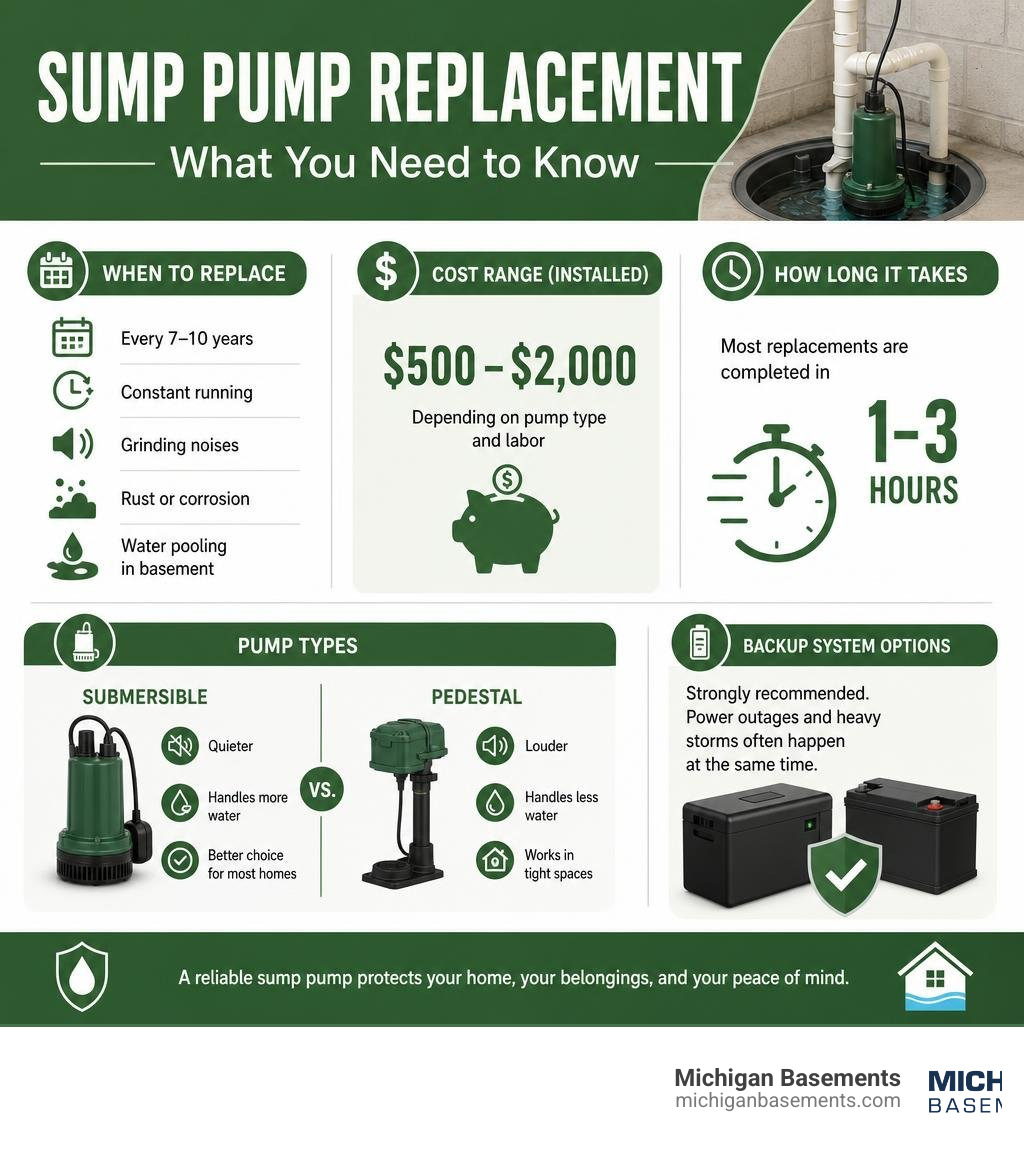
- When to replace: Every 7–10 years, or sooner if you notice constant running, grinding noises, rust, or water pooling in your basement
- Average cost: $500–$2,000 installed, depending on pump type and labor
- How long it takes: Most replacements are completed in 1–3 hours by a professional
- Submersible vs. pedestal: Submersible pumps are quieter, handle more water, and are the better choice for most Southeast Michigan homes
- Battery backup: Strongly recommended — power outages and heavy storms often happen at the same time
Water damage is one of the most expensive problems a homeowner can face. In Southeast Michigan, that risk is real. Clay soils hold water against your foundation. Spring snowmelt and heavy storms push water tables up fast. And when a sump pump fails — often during the worst storm of the year — the results can be devastating.
The good news: staying ahead of a failing pump is straightforward when you know what to look for.
I’m Dominic Hesano, owner of Michigan Basements, and I’ve handled sump pump replacement across Southeast Michigan for years — in flooded basements, aging homes, and crawl spaces where the pump hadn’t been touched in over a decade. In the sections below, I’ll walk you through everything you need to know to make the right call for your home.
When is Sump Pump Replacement Necessary?
No mechanical system lasts forever, and your basement’s primary line of defense is no exception. While some high-quality cast-iron pumps operating under light conditions can stretch a bit longer, the general industry consensus is that you should plan for a replacement every 7 to 10 years.
If your current unit is pushing past this window, you are essentially borrowing time. It is always better to replace an aging pump proactively than to deal with a midnight emergency when the water is already rising. For more details on what determines this timeline, you can read our guide on How Long Does a Sump Pump Last?.
Recognizing the warning signs of an impending failure can save you thousands of dollars in restoration costs. Keep an eye out for these common red flags:
- Constant Cycling or Continuous Running: If your pump is running non-stop, even during dry spells, the float switch may be stuck, or the motor may be struggling to keep up with groundwater levels.
- Unusual or Excessive Noise: Sump pumps should hum quietly. If you hear grinding, rattling, or loud clanging, it often points to a damaged impeller, worn motor bearings, or a failing motor.
- Severe Vibration: A pump that vibrates excessively during operation can eventually shake itself out of alignment, damaging the discharge pipe connections or causing the float switch to hang up against the basin wall.
- Visible Rust and Corrosion: The damp environment of a sump pit is naturally harsh. Over time, moisture and mineral deposits degrade the pump’s housing, leading to electrical shorts and mechanical blockages.
- Frequent Electrical Trips: If your pump repeatedly trips your GFCI outlet or circuit breaker, it is a clear sign of an internal electrical short.
If you are experiencing any of these issues, it is highly likely your system is compromised. You can explore these issues further in our article on Sump Pump Not Working: Common Sump Pump Problems.
For homeowners living in the Metro Detroit area, local weather patterns play a major role in system wear and tear. Heavy spring rains combined with frozen winter ground can overwhelm an older unit in hours. If your home is located in Southeast Michigan, understanding how our regional climate accelerates pump wear is essential for timely sump pump replacement.
Choosing the Right Sump Pump for Your Home
To choose the right replacement system, it helps to understand the fundamentals of how these systems operate. If you need a quick refresher on the basics, you can read our introductory guides: What Is a Sump Pump? and What Does a Sump Pump Do?.
When selecting a new pump, you must decide on the pump style, body material, horsepower, and backup power options.
Submersible vs. Pedestal Sump Pumps
The two primary types of residential sump pumps are submersible and pedestal models. Each has a distinct design that impacts how they perform, how long they last, and where they should be installed.
- Submersible Sump Pumps: These units are designed to sit entirely underwater at the bottom of the sump basin. The motor is hermetically sealed inside a heavy-duty housing (ideally cast iron). Because the motor is submerged, the surrounding basin water acts as a natural coolant, preventing overheating during long, heavy pumping cycles. They are exceptionally quiet and can easily handle small solids and debris without clogging.
- Pedestal Sump Pumps: A pedestal pump features an open motor mounted on top of a tall shaft that sits completely above the sump pit. Only the impeller and intake base sit in the water. Because the motor stays dry, pedestal pumps are easier to service and can sometimes last longer in low-volume applications. However, they are much louder, take up valuable space at the top of the pit, and cannot handle debris.
| Feature | Submersible Sump Pumps | Pedestal Sump Pumps |
|---|---|---|
| Motor Location | Bottom of the pit (underwater) | Top of the pit (above water) |
| Noise Level | Extremely quiet (muffled by water) | Moderately loud |
| Debris Handling | Excellent (handles small solids) | Poor (prone to clogging) |
| Lifespan | 5 to 15 years | 10 to 30 years (in low-use dry areas) |
| Basin Space | Requires a wider pit | Fits in narrow pits |
| Aesthetics | Hidden beneath a sealed lid | Motor visible above floor level |
At Michigan Basements, we almost always recommend high-quality, cast-iron submersible pumps for our clients in Southeast Michigan. They provide the quiet, high-volume performance needed to protect finished basements and tight crawl spaces. Professional installation ensures these systems are calibrated correctly to handle heavy water flow.
Sizing, Horsepower, and Battery Backups
Selecting the correct horsepower (HP) is critical. If your pump is underpowered, it won’t be able to push water out of the basement fast enough during a heavy storm. If it is overpowered, it will “short-cycle” (turn on and off too rapidly), which quickly burns out the motor.
- 1/3 Horsepower: This is the standard size for average homes with moderate water tables and normal drainage needs.
- 1/2 Horsepower: Highly recommended for homes in high-water-table areas, homes with heavy clay soils (common in Macomb and Oakland counties), or systems with high vertical lift (pushing water up more than 10 feet).
- 3/4 Horsepower and Higher: Typically reserved for extreme water conditions, lakefront properties, or homes with massive basement footprints.
Beyond the primary pump, you must consider what happens when the power goes out. Severe storms that cause flooding are the exact same storms that knock out the electrical grid. A primary pump run on standard household current is useless during a blackout.
That is why a battery backup system is not a luxury—it is an absolute necessity. A high-quality backup system, such as those built with reliable Wayne Pumps | Durable, Reliable, Worry Free, will automatically kick on the moment your primary pump loses power or fails. To understand how these systems work together to keep your home safe, read our article on how Sump Pumps Protect Your Home.
Sump Pump Replacement Cost and Sizing Factors
When budgeting for a sump pump replacement, it is important to understand that costs vary based on your specific setup, the quality of the equipment, and the complexity of the plumbing.
- Equipment Costs: A standard, contractor-grade submersible pump typically costs between $150 and $600. Adding a high-quality battery backup system adds another $350 to $900 for standard models, or up to $1,400 for advanced dual-pump configurations with smart monitoring.
- Labor and Installation: Professional plumbing and waterproofing labor for a straightforward replacement typically ranges from $300 to $800.
- Total Replacement Range: For a professional to swap out an old pump in an existing, clean pit, you can expect to pay between $500 and $2,000 total, including parts, labor, and a professional warranty.
Several regional and structural factors can drive these costs up or down. In Southeast Michigan, our local geology plays a massive role. The heavy clay soils across Metro Detroit do not drain water quickly. Instead, clay traps water right against your basement walls and floor, creating sustained hydrostatic pressure. This force pushes water upward through any hairline cracks in your concrete slab.
Because of this constant pressure, pumps in our area cycle much more frequently than they would in sandy soils. This means we must size pumps carefully and ensure the discharge line is perfectly configured. If your discharge line is too narrow, clogged, or lacks proper freeze protection for our cold Michigan winters, the pump will work twice as hard and fail years ahead of its time.
To see how we integrate these pumps into a larger, comprehensive drainage strategy, read our guide on How Sump Pumps & Water Drainage Systems Work Together. Homeowners in Macomb County, Oakland County, and Wayne County must account for these local soil challenges to ensure their systems are built to last.
Why Professional Sump Pump Replacement is Recommended Over DIY
With so many home improvement tutorials online, it can be tempting to treat a sump pump replacement as a weekend DIY project. However, because this single piece of equipment stands between your home and thousands of dollars in water damage, mistakes can be incredibly costly.
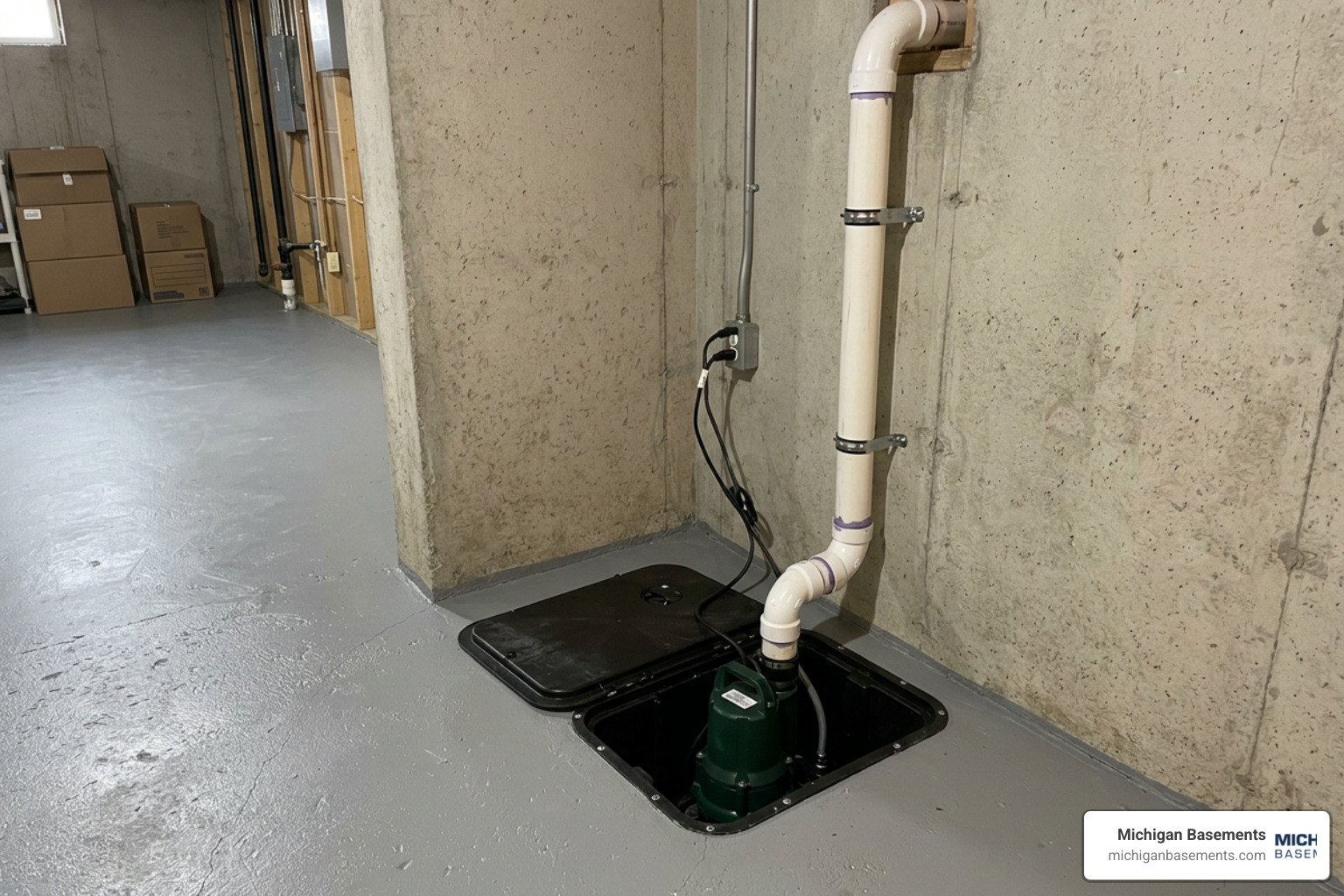
Working in a wet sump pit also introduces serious electrical hazards. Water and electricity are a deadly combination. A professional installer knows how to safely isolate power, test for stray current, and ensure the outlet is properly GFCI-protected and up to current building codes.
Furthermore, if your pump is failing because of a systemic issue—like a clogged basin or a collapsed discharge line—simply dropping a new pump into the pit won’t solve the problem. Professionals can diagnose these underlying issues immediately. To learn how to spot these issues yourself, read our guide on How to Tell If a Sump Pump Is Clogged.
The Risks of Improper DIY Installation
When homeowners attempt to tackle this job themselves, we frequently see several common installation mistakes:
- Incorrect Basin Sizing and Placement: If the pump is not perfectly centered and leveled on a solid paver or stand, it can tilt. A tilted pump will cause the float switch to hang up against the rough side of the basin wall, either preventing the pump from turning on or causing it to run continuously until the motor burns out.
- Improper Check Valve Installation: The check valve is a one-way valve installed in the discharge pipe that prevents water from flowing back down into the pit once the pump turns off. If it is installed backward, no water can escape. If it is omitted or fails, several gallons of water will drain back into the pit every time the pump shuts off, causing the system to short-cycle and fail prematurely.
- Float Switch Obstruction: Sump pits are tight spaces. If the discharge plumbing, electrical cords, or backup pump pipes are not routed cleanly, they can easily trap the float switch in the “down” position, rendering the pump useless when water rises.
- PVC Cement Failures: Properly priming and cementing discharge pipes is critical. The high pressure generated by a 1/2 HP pump can easily blow apart a poorly glued PVC joint, spraying high-velocity water all over your basement ceiling and walls.
- Voided Manufacturer Warranties: Many premium pump manufacturers will only honor their multi-year warranties if the unit was installed by a licensed professional.
The Professional Sump Pump Installation Process
When you hire a professional team like Michigan Basements, we follow a strict, multi-step process to ensure your new system is completely bulletproof:
- Step 1: Power Disconnection and Safety Check: We turn off the dedicated breaker and use a non-contact voltage tester to verify the pit is completely safe to work in.
- Step 2: Old Pump Removal: We disconnect the discharge pipe at the check valve, loosen the mounting clamps, and carefully lift the old unit out of the basement.
- Step 3: Pit Cleaning and Debris Removal: We scoop out mud, silt, gravel, and trash that has accumulated at the bottom of the basin. This step is crucial because debris will quickly clog a brand-new impeller.
- Step 4: New Pump Placement: We set the new submersible pump onto a stable, elevated base at the bottom of the pit to keep it clear of any future sediment buildup.
- Step 5: Discharge Pipe and Check Valve Connection: We run clean, heavy-duty schedule 40 PVC pipe from the pump outlet, installing a premium, silent check valve with the flow arrow oriented pointing straight up.
- Step 6: Float Switch Calibration: We position the pump and secure all electrical cords to ensure the float switch has 100% free, unobstructed movement.
- Step 7: Load Testing and Calibration: We fill the pit with water to simulate a heavy rainstorm, verifying exactly where the pump activates, how quickly it empties the pit, and that the check valve seals perfectly when the motor shuts off.
By trusting a professional team, you ensure that your home remains dry and protected, avoiding the common pitfalls of DIY attempts and securing a reliable defense against water damage.
Frequently Asked Questions About Sump Pump Replacement
To help you make an informed decision, we have compiled direct answers to the most common questions homeowners ask us about this process.
How often should a sump pump be replaced?
On average, a residential sump pump should be replaced every 7 to 10 years.
However, this lifespan is heavily dependent on your local soil conditions and how often the pump cycles. In Southeast Michigan, our combination of dense clay soil and extreme seasonal weather (heavy spring thaws and summer downpours) forces pumps to work harder than they would in other parts of the country. If your pump runs multiple times an hour during rainy seasons, plan to replace it closer to the 7-year mark to avoid unexpected failures. Michigan Basements recommends proactive replacement to prevent emergency basement flooding in Oakland, Macomb, and Wayne counties.
What is the average cost of a professional sump pump replacement?
Most homeowners pay between $500 and $2,000 for a professional replacement in an existing pit.
The lower end of this range ($500 to $900) typically covers a standard, high-quality 1/3 HP or 1/2 HP submersible pump with professional installation and a new check valve. The higher end of the range ($1,200 to $2,000+) includes the addition of a heavy-duty battery backup system, smart monitoring alarms, or minor modifications to the discharge plumbing to ensure proper flow. For an accurate estimate, Michigan Basements provides detailed, upfront pricing tailored to your home’s specific drainage needs.
Should I hire a professional waterproofer or a plumber for replacement?
While standard plumbers are excellent at fixing leaky faucets and clearing clogged drains, we highly recommend hiring a basement waterproofing specialist like Michigan Basements for your sump pump needs.
A waterproofer looks at your home’s water management as a complete, integrated system. We don’t just swap out the pump; we analyze the hydrostatic pressure against your foundation, inspect the interior drain tile system, check the slope of your yard, and ensure the discharge line is directing water far enough away from your home to prevent it from recycling back into the pit.
To understand why this system-wide approach is so important, read our detailed comparison on Why Hire a Waterproofer, Not a Plumber, for Sump Pump Repair.
Conclusion
Your sump pump is the single most important mechanical defense your home has against basement flooding. Don’t wait for a wet basement, ruined drywall, and mold growth to tell you that your pump has reached the end of its life. Staying proactive with a professional sump pump replacement is one of the smartest, most cost-effective investments you can make in your property’s long-term health.
At Michigan Basements, we specialize in keeping basements dry, safe, and comfortable across Southeast Michigan, including Oakland, Macomb, and Wayne counties. As a family-owned business, we pride ourselves on clean workmanship, transparent communication, and involving you in every step of the process.
If your pump is nearing the end of its lifespan or making unusual noises, don’t leave your basement’s safety to chance. Contact us today to schedule your no-cost inspection and learn more about our professional Our Services: Sump Pump Installation. We are here to help you protect your home.
 Get instant pricing!